
Bursitis Knee Symptoms Causes Diagnosis and Treatment
Bursitis knee symptoms commonly include a localized swelling, tenderness, warmth and pain that becomes worse with kneeling or repeated bending. Knee bursitis...
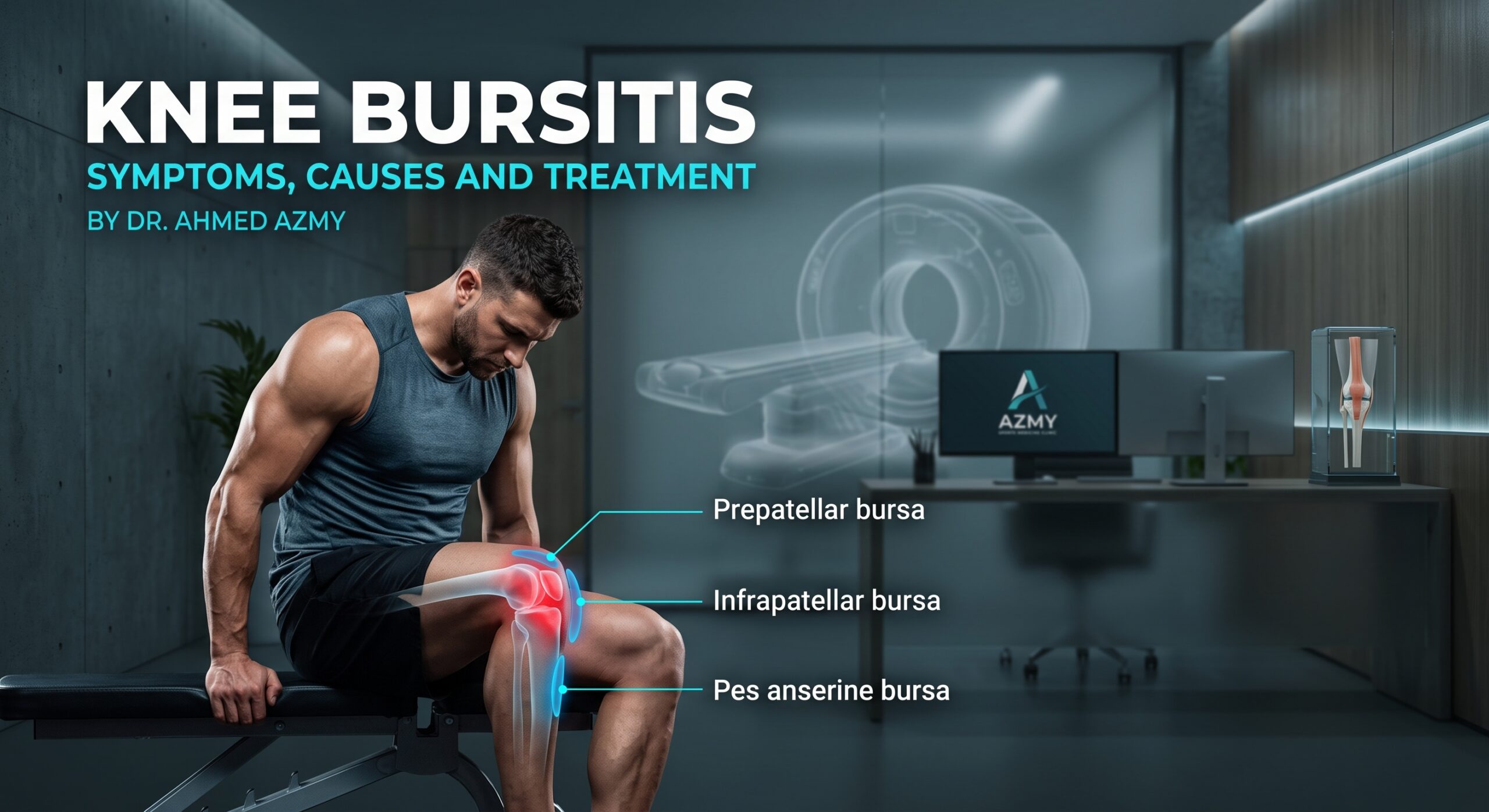
Bursitis knee symptoms commonly include a localized swelling, tenderness, warmth and pain that becomes worse with kneeling or repeated bending. Knee bursitis develops when one of the small fluid-filled sacs around the joint becomes irritated or inflamed. Repeated pressure, overuse, a direct blow, gout, arthritis or infection may be responsible. A hot red swelling with fever, chills, a wound or drainage needs prompt medical assessment because an infected bursa requires different treatment.
The position of the swelling matters. A soft lump over the kneecap often points to prepatellar bursitis, while tenderness on the inner side below the joint may be related to pes anserine bursitis. Symptoms can overlap with arthritis, a meniscus injury, tendon problems, gout and infection, so location alone cannot confirm the diagnosis.
What Is Knee Bursitis
A bursa is a thin sac containing a small amount of fluid. It cushions areas where skin, tendons or muscles move over bone and helps reduce friction. Bursitis means that a bursa has become inflamed and may produce extra fluid. Around the knee, this can lead to a clearly defined swelling, pressure, tenderness and restricted movement.
The phrase bursitis knee is often used in searches for any inflamed bursa near the joint, but there is more than one clinical pattern. Prepatellar bursitis affects the sac between the skin and kneecap. Infrapatellar bursitis develops below the kneecap, and pes anserine bursitis affects the inner side of the upper shin, usually a few centimeters below the joint line. Identifying the involved structure helps distinguish bursitis from pain coming from inside the knee.
Types of Bursitis Around the Knee
The following table summarizes common patterns. It is a guide to the clinical discussion, not a tool for self-diagnosis.
| Location of pain or swelling | Possible type | Typical clinical clues |
|---|---|---|
| Directly over the kneecap | Prepatellar bursitis | A visible, soft or tense swelling; pain with kneeling; may follow prolonged pressure or a direct blow |
| Just below the kneecap | Superficial or deep infrapatellar bursitis | Tenderness below the patella, often linked to kneeling, jumping or repetitive loading |
| Inner knee below the joint line | Pes anserine bursitis | Pain with stairs, exercise or rising from a chair; may coexist with osteoarthritis |
| Back of the knee | Another condition is often more likely | A Baker’s cyst is a joint-fluid swelling and is not the same as an inflamed superficial bursa |
What Causes Bursitis Knee Pain and Swelling
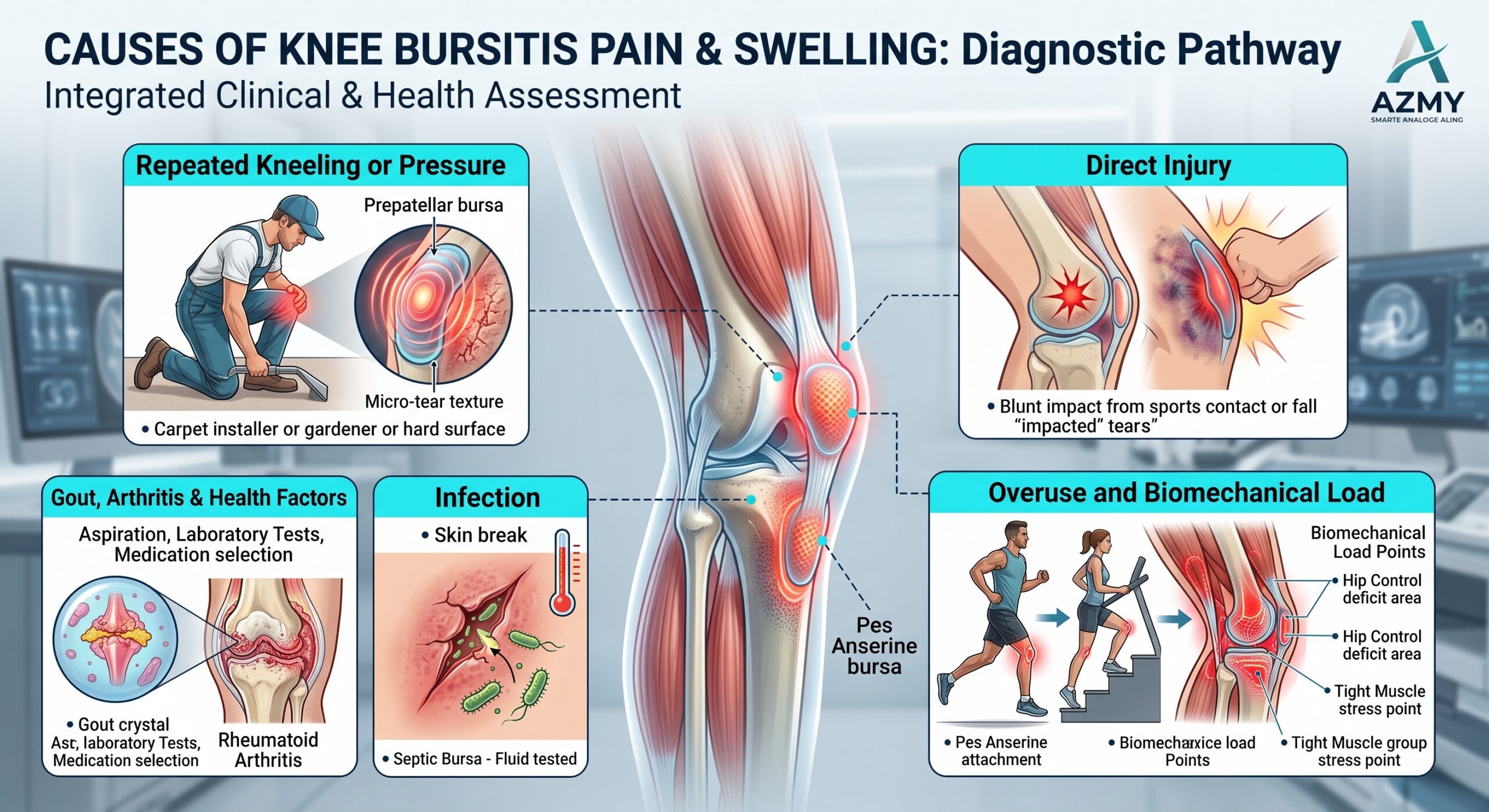
Repeated Kneeling or Pressure
Frequent kneeling on a hard surface is a classic cause of prepatellar bursitis. Plumbers, carpet installers, gardeners, cleaners and people whose work repeatedly loads the front of the knee can be affected. The irritation may build gradually, and swelling can be more obvious than pain at first. Athletes in wrestling, volleyball, football and other sports involving falls or contact may develop a similar problem.
Direct Injury
A fall or blow to the front of the knee can irritate the bursa and cause rapid swelling. Bruising may be present. A traumatic swelling still needs assessment if pain is severe, weight-bearing is difficult, the knee is deformed or movement is markedly restricted, because a fracture or another internal injury may coexist.
Overuse and Biomechanical Load
Repetitive running, stairs, jumping or a sudden increase in training can overload tissues on the inner or front of the knee. Pes anserine bursitis is sometimes associated with osteoarthritis, higher body weight, tight or weak muscle groups and altered lower-limb mechanics. A clinician should look beyond the painful spot and assess training changes, hip control, knee alignment, strength and flexibility.
If symptoms started with a recent change in training, review these practical principles for preventing sports injuries.
Infection
Bacteria can enter a superficial bursa through a cut, scrape, puncture, insect bite or another break in the skin. This is called septic or infectious bursitis. Increasing redness, heat, tenderness, fever, chills, drainage or feeling generally unwell raises concern. Infection cannot be safely distinguished by keyword symptoms alone and may require fluid testing, antibiotics and sometimes drainage.
Gout Arthritis and Other Health Factors
Gout crystals, rheumatoid arthritis and osteoarthritis can be associated with bursitis. Diabetes, immune suppression and some chronic health conditions may increase the consequences of infection or affect treatment choices. These details matter when deciding whether aspiration, laboratory tests, medication or referral is appropriate.
Knee Bursitis Symptoms
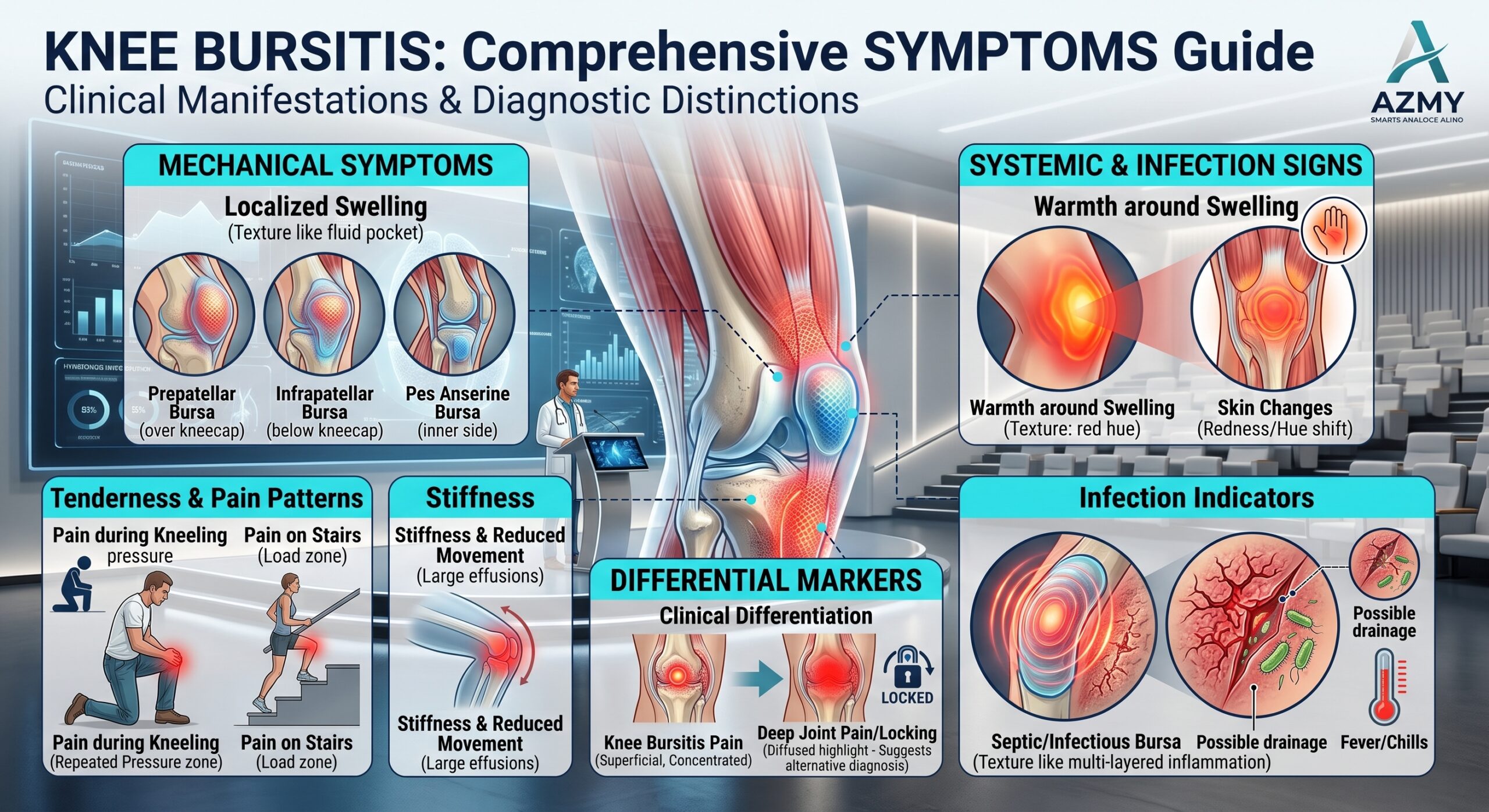
Symptoms vary with the bursa involved and the cause. They may develop gradually after repeated pressure or begin quickly after trauma. Common features include:
- A localized swelling over, below or on the inner side of the knee
- Tenderness when the area is pressed
- Warmth around the swelling
- Pain during kneeling, bending, stairs or repeated activity
- Stiffness or reduced movement when swelling is large
- Redness, skin changes, drainage, fever or chills when infection is possible
Pain from bursitis is often superficial and concentrated over a specific area. Deep joint pain, locking, repeated giving way or a large joint-wide swelling may suggest another diagnosis or a second problem. An orthopedic examination is useful when the pattern is unclear or symptoms are not improving.
Bursitis Knee or Another Cause of Knee Pain
Not every swelling or painful kneecap is bursitis. The distinction affects treatment, particularly when infection or an internal knee injury is possible.
| Finding | Non-infectious bursitis may cause | Reason to seek prompt assessment |
|---|---|---|
| Swelling | Localized swelling linked to kneeling, load or a minor blow | Rapidly enlarging swelling, spreading redness, drainage or a wound |
| Temperature | Mild warmth can occur with inflammation | Marked heat with fever, chills or feeling unwell |
| Movement | Pain when kneeling or bending; movement may remain possible | Inability to extend the knee, severe pain or inability to bear weight |
| Other clues | Symptoms ease when pressure and provoking activity are reduced | Recent surgery, immune suppression, uncontrolled diabetes or suspected infection |
When Should You Seek Urgent Medical Care
While uncomplicated knee bursitis typically responds well to conservative treatment and load reduction, certain red-flag symptoms indicate infection, acute traumatic damage, or systemic complications that demand immediate clinical emergency care rather than routine home management.
-
Signs of Septic (Infectious) Bursitis: A knee that is distinctly hot to the touch, visibly red, rapidly swelling, or accompanied by fever, chills, pus drainage, or an open skin break requires urgent medical attention—never attempt to puncture, squeeze, or drain the fluid yourself.
-
Acute Traumatic Joint Injury: Immediate inability to bear weight after a fall or direct blow, visible joint deformity, an abnormal kneecap position, or massive fluid accumulation within an hour suggests a fracture, patellar dislocation, or major ligament tear.
-
Neurovascular Compromise: A lower leg or foot that turns cold, pale, bluish, or experiences progressive numbness, tingling, or sudden weakness points toward impaired blood circulation or nerve compression.
-
Thromboembolic & Systemic Warning Signs: Sudden swelling, warmth, or severe tenderness in the calf, as well as shortness of breath or chest pain, signals serious vascular complications (such as deep vein thrombosis or pulmonary embolism) that require emergency medical evaluation.
How Knee Bursitis Is Diagnosed
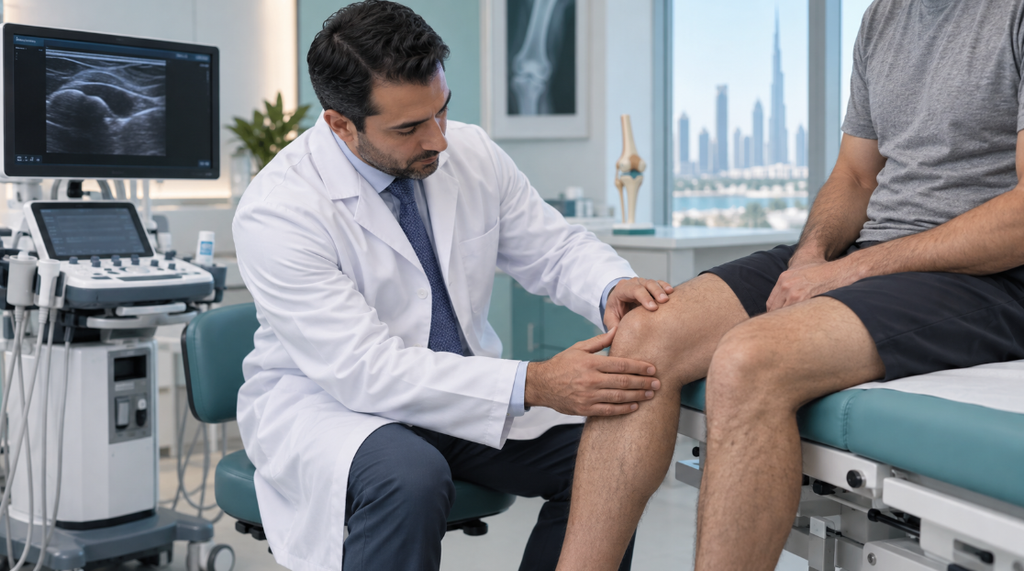
Diagnosis begins with the history and a physical examination. The specialist asks when the swelling started, whether there was kneeling, overuse, a fall or broken skin, and whether fever or chills occurred. The painful knee is compared with the other side. The clinician checks the exact location of swelling, skin condition, warmth, tenderness, range of motion, joint stability and the circulation and sensation in the leg.
Many cases can be recognized clinically, but tests may be selected to answer a specific question:
- X-rays may be used after trauma or when a bone problem, arthritis or another cause is suspected. Bursae themselves are not usually defined by a standard X-ray.
- Ultrasound can show a superficial fluid collection, guide aspiration and help evaluate other soft-tissue problems.
- MRI is not required for every case. It may be considered when the diagnosis remains uncertain or an internal knee injury is suspected.
- Aspiration removes fluid with a sterile needle. Laboratory analysis may look for bacteria or crystals when infection or gout is a concern.
Aspiration is a medical procedure, not a home treatment. The decision depends on the cause, skin condition, recurrence, severity and infection risk.
Patients with persistent or unclear symptoms can explore the clinic’s full range of knee treatments and arthroscopy services.
Bursitis Knee Treatment
Treatment is matched to the type of bursitis and whether infection is present. Most non-infectious cases improve without surgery, but one plan does not fit every patient.
Activity Modification and Protection
Stop or reduce the activity that compresses the painful bursa. Avoid kneeling and repetitive deep bending until symptoms settle. If kneeling is unavoidable later, use well-fitting padded knee protectors and take regular breaks. An athlete may temporarily substitute lower-impact training, provided it does not reproduce pain or increase swelling.
Ice Compression and Elevation
A wrapped cold pack may help pain and swelling. Do not place ice directly on the skin, and limit each application to a short interval. Light compression may help in selected non-infectious cases, but it should not cause numbness, color change or increased pain. Elevating the leg can also reduce swelling. Ask a clinician if trauma was significant or infection is possible before relying on self-care.
Pain Medication
Anti-inflammatory medication may be considered when it is safe for the individual, but it is not suitable for everyone. Kidney disease, stomach ulcers, blood-thinning medication, cardiovascular conditions, pregnancy and other medicines can change the risk. Use only according to a clinician or pharmacist’s advice and the product instructions. Pain relief should not delay assessment of a hot red knee.
Physiotherapy and Gradual Loading
Physiotherapy may be useful when muscle weakness, flexibility, training load or movement control contributes to symptoms. Treatment can include a progressive program for the hip, thigh and lower leg, followed by a staged return to stairs, running or sport. Exercises should be selected after the source of pain is reasonably clear; repeatedly compressing an inflamed bursa is unlikely to help.
For runners, these knee pain and safe outdoor training tips can support a safer return after assessment.
Aspiration and Injection
A clinician may aspirate a large or persistent bursa to relieve pressure or obtain a sample. A corticosteroid injection is considered only in selected non-infectious cases after the risks have been reviewed. Steroid injection is not appropriate when infection is suspected, and repeated injections can have local risks. The result is more durable when the activity or mechanical trigger is also addressed.
Antibiotics or Surgery
Septic bursitis is treated with antibiotics chosen according to the clinical picture and, when available, test results. Some patients require repeat aspiration or surgical drainage. Surgery to remove a bursa is uncommon and is generally reserved for persistent, recurrent or complicated cases that have not responded to appropriate conservative care.
If a procedure is eventually discussed, understanding the patient journey at Dr. Ahmed Azmy Clinic can make the evaluation and follow-up steps clearer.
What Can You Do at Home
For mild, uncomplicated bursitis without red-flag warning signs, early home self-care focuses on offloading the inflamed bursa, easing localized irritation, and carefully tracking symptom progression.
-
Offload Direct Pressure: Avoid kneeling directly on hard surfaces, use thick gel knee pads if kneeling is unavoidable, and temporarily modify deep squats or repetitive stair climbing that compresses the inflamed bursa.
-
Cold Therapy & Elevation: Apply a towel-wrapped cold pack for 10–15 minutes several times daily to minimize swelling and pain; never place bare ice directly onto sensitive or inflamed skin.
-
Skin Protection & Wound Care: Keep superficial scrapes, abrasions, or puncture marks around the knee thoroughly clean, sanitized, and covered to prevent bacterial entry and secondary septic bursitis.
-
Harmful Practices to Avoid: Do not attempt to pop, squeeze, or use a needle to aspirate fluid at home; avoid aggressive deep-tissue massage over hot swollen tissue, and do not force painful terminal knee flexion.
-
Monitor the Healing Trend: Home management should produce steady improvement within several days, arrange a clinical assessment if swelling lingers, repeatedly returns, limits daily walking, or begins spreading red warmth across the joint.
How Long Does Knee Bursitis Take to Heal
Recovery time depends on the bursa involved, the cause, how long symptoms were present and whether the trigger can be removed. A mild non-infectious episode may begin improving over days and continue settling over several weeks. Long-standing swelling, repeated kneeling, arthritis, gout or infection can extend recovery. Returning to sport or work too quickly can restart the irritation.
A useful return-to-activity checklist is minimal swelling, comfortable daily walking, near-normal motion and the ability to complete a graded version of the task without symptoms worsening later that day or the next morning. A clinician or physiotherapist can individualize this progression.
How to Prevent Knee Bursitis
Preventing knee bursitis requires minimizing repetitive friction and pressure over sensitive bursal sacs, managing athletic training loads, and protecting the skin against bacterial entry.
- Use padded knee protection for work, prayer, gardening or sport when prolonged kneeling is expected.
- Change position regularly and take short breaks rather than maintaining pressure on one area.
- Increase running, jumping and strength loads gradually and allow time for recovery.
- Address technique, muscle weakness and flexibility with an individualized plan when symptoms recur.
- Clean and cover cuts around the knee and monitor them for increasing redness, warmth or discharge.
- Manage contributing conditions such as gout, arthritis or diabetes with the appropriate clinician.
When to See an Orthopedic Specialist in Sharjah
Book an orthopedic assessment if bursitis knee symptoms persist despite activity modification, repeatedly return, follow a significant injury or make it difficult to work, climb stairs or exercise. An examination is also important when swelling is not clearly located in a superficial bursa, because cartilage, meniscus, tendon and arthritic problems can create a similar complaint.
For a focused knee assessment in Sharjah, contact Dr. Ahmed Azmy Clinic to arrange an appointment. Seek urgent medical care instead of a routine booking when infection or another emergency is suspected.
Conclusion
Bursitis knee symptoms are usually localized around a specific bursa, but swelling, warmth and pain can also reflect injury, arthritis, gout or infection. The safest approach is to reduce direct pressure, watch for red flags and obtain an examination when symptoms persist, recur or are severe. A hot red knee with fever, chills, a wound or drainage requires prompt medical assessment.
Medical Disclaimer
This article is for general education only. It does not provide a diagnosis or replace care from a qualified healthcare professional. Treatment and return-to-activity decisions must be individualized. Seek urgent medical help for severe or rapidly worsening symptoms, suspected infection, major trauma, chest pain or shortness of breath.
References
American Academy of Orthopaedic Surgeons. Prepatellar (Kneecap) Bursitis.
Mayo Clinic. Knee bursitis: Symptoms and causes.
Mayo Clinic. Knee bursitis: Diagnosis and treatment.
Cleveland Clinic. Prepatellar Bursitis: Symptoms and Treatment.
NHS. Bursitis.