
Cartilage Damage in Athletes Treatment in Sharjah
Advanced diagnosis and treatment for cartilage damage in Sharjah and across the UAE, helping athletes return to sports safely and confidently.
Cartilage plays a vital role in protecting joints by providing a smooth, shock-absorbing surface that allows bones to move without friction. When cartilage becomes damaged, athletes may experience pain, swelling, stiffness, and reduced performance during training and competition.
What Is Cartilage Damage?
Cartilage is a smooth, durable tissue that covers the ends of bones inside a joint. Its primary function is to reduce friction, absorb shock, and allow smooth movement during physical activity.
Cartilage damage occurs when this protective surface becomes injured or worn. In athletes, cartilage injuries often develop following sports trauma, repetitive impact, sudden twisting movements, or instability caused by previous injuries.
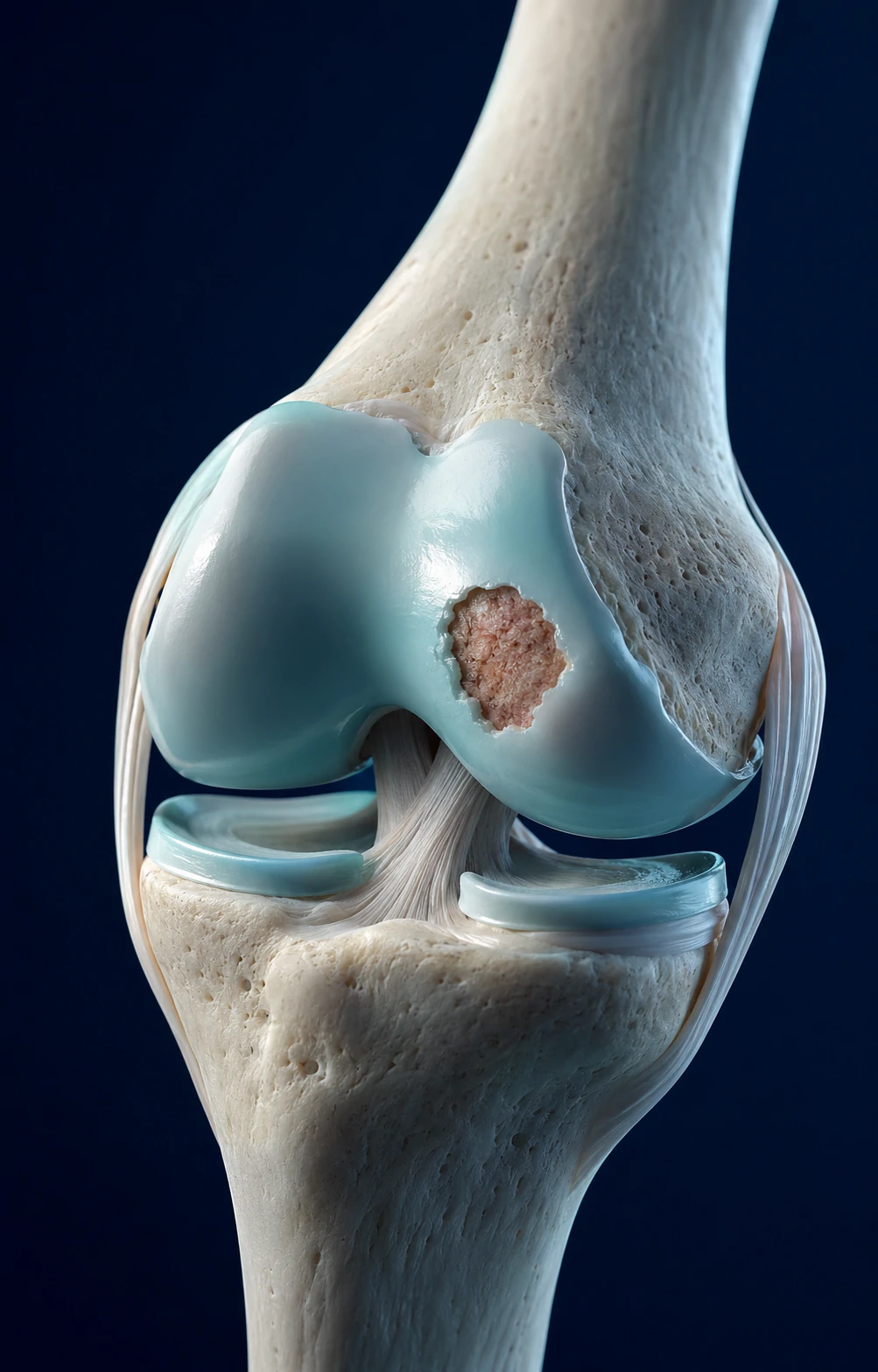
What Is Articular Cartilage Damage?
Articular cartilage damage refers to injury affecting the smooth cartilage lining the surfaces of a joint.
Articular cartilage damage can vary in severity, depth, and the amount of joint surface affected. Understanding the type of cartilage injury helps guide treatment decisions and recovery planning.
Cartilage Softening (Chondromalacia)
Early-stage cartilage irritation where the cartilage becomes softer than normal.
Mild cartilage wear beneath the kneecap.
Partial Cartilage Damage
Damage affecting only part of the cartilage thickness while healthy cartilage remains.
Localised cartilage defects within the knee joint.
Full-Thickness Cartilage Damage
Complete loss of cartilage in a specific area, exposing underlying bone surfaces.
Advanced focal cartilage lesions.
Osteochondral Injury
Damage involving both the cartilage surface and the underlying bone.
Sports injuries caused by twisting or impact trauma.
Sports-Related Cartilage Injury
Cartilage damage resulting from repetitive athletic loading or acute sports trauma.
Knee cartilage damage following football, basketball, or running injuries.
Advanced Cartilage Degeneration
Extensive cartilage wear affecting joint function, mobility, and athletic performance.
Progressive cartilage loss associated with chronic joint symptoms.
Types of Cartilage Damage in Athletes
Cartilage injuries can vary depending on the location, severity, and depth of the damage. Accurate diagnosis helps determine the most effective treatment strategy.
Focal Cartilage Defect
Localised cartilage damage affecting a specific area within the joint.
Chondral Injury
Damage limited to the cartilage surface without significant bone involvement.
Osteochondral Injury
Injury affecting both the cartilage and the underlying bone.
Full-Thickness Cartilage Loss
Complete loss of cartilage in the affected region.
Patellar Cartilage Damage
Cartilage injury affecting the area beneath the kneecap.
Sports-Related Cartilage Damage
Cartilage injury resulting from repetitive athletic stress or sports trauma.
Cartilage Damage Symptoms
Cartilage injuries often develop gradually or become noticeable after a sports-related injury. Symptoms may vary depending on the location and severity of the damage.
Activity-Related Joint Pain
- Pain during running, jumping, or pivoting
- Discomfort that worsens with activity
- Symptoms improve with rest
Swelling After Sports
- Recurrent swelling following exercise
- Joint inflammation after training sessions
- Increased swelling after intense activity
Joint Clicking or Catching
- Sensation of catching during movement
- Clicking or grinding inside the joint
- Intermittent mechanical symptoms
Reduced Athletic Performance
- Difficulty maintaining previous performance levels
- Reduced speed and agility
- Decreased training capacity
Joint Stiffness
- Stiffness after periods of rest
- Reduced flexibility within the joint
- Difficulty warming up before activity
Loss of Explosive Movement
- Reduced jumping ability
- Difficulty accelerating or changing direction
- Loss of confidence during sports participation
Causes of Cartilage Damage in Athletes
Cartilage damage in athletes can develop after a single injury or as a result of repetitive stress placed on a joint over time. Understanding the underlying cause helps guide treatment and prevent further damage.
High-Impact Sports
Activities involving running, jumping, and rapid direction changes place significant stress on joint cartilage.
Reveal medical visualTwisting Knee Injuries
Sudden pivoting movements may damage cartilage during sports participation.
Reveal medical visualACL Injuries
Joint instability following ACL injuries can increase cartilage wear over time.
Reveal medical visualMeniscus Tears
Meniscus injuries may reduce shock absorption and place additional pressure on cartilage surfaces.
Reveal medical visualRepetitive Joint Loading
Continuous training without adequate recovery may contribute to cartilage breakdown.
Reveal medical visualPrevious Joint Trauma
Prior sports injuries can increase the risk of future cartilage damage and degeneration.
Reveal medical visualStages of Cartilage Damage in Athletes
Cartilage damage can progress gradually if the underlying problem is not addressed. Early diagnosis and treatment may help slow progression and improve long-term outcomes.
Early Cartilage Damage
- Mild cartilage irritation and softening.
- Symptoms mainly occur during sports activities.
- Minimal impact on athletic performance.
- Mild swelling after activity.
- Early intervention may prevent progression.
Progressive Cartilage Damage
- Noticeable cartilage wear with increasing symptoms.
- Pain becomes more frequent during daily activities.
- Reduced mobility and declining performance.
- Recurrent swelling and joint irritation.
- Structured treatment is often required.
Advanced Cartilage Damage
- Significant cartilage loss affecting joint function.
- Persistent pain and stiffness may occur even at rest.
- Significant functional limitations and activity restrictions.
- Chronic inflammation and mechanical symptoms.
- Advanced treatment may be necessary to restore function.
Cartilage Damage in Athletes Diagnosis
Accurate diagnosis is essential for determining the location, severity, and extent of cartilage injury. Early assessment helps guide treatment decisions and improve recovery outcomes.
Medical History Assessment
What It Evaluates
- Sports participation
- Previous injuries
- Symptom progression
- Activity limitations
Why It's Important
- Identifies injury mechanisms
- Detects contributing risk factors
- Supports treatment planning
Physical Examination
What It Evaluates
- Joint tenderness
- Swelling
- Range of motion
- Functional limitations
Why It's Important
- Identifies affected joints
- Assesses severity
- Helps determine next diagnostic steps
Range of Motion Testing
What It Evaluates
- Joint flexibility
- Movement quality
- Functional restrictions
Why It's Important
- Detects stiffness
- Assesses mechanical limitations
- Helps monitor progress
Functional & Sports Assessment
What It Evaluates
- Running mechanics
- Jumping ability
- Sport-specific movements
Why It's Important
- Identifies performance limitations
- Detects movement abnormalities
- Guides rehabilitation planning
X-Ray Imaging
What It Evaluates
- Bone structure
- Joint alignment
- Associated abnormalities
Why It's Important
- Rules out fractures
- Assesses joint health
- Supports diagnosis
MRI & Advanced Imaging
What It Evaluates
- Articular cartilage damage
- Meniscus injuries
- Ligament injuries
- Joint structures
Why It's Important
- Provides detailed cartilage assessment
- Determines injury severity
- Guides treatment decisions
When Should You See a Doctor?
Many athletes continue training despite symptoms, hoping they will improve with rest. However, persistent cartilage damage may worsen if left untreated.
You should seek medical attention if you experience:
Persistent Pain
- Pain lasting more than a few days.
- Pain during running or jumping.
- Symptoms worsening over time.
- Pain affecting daily activities.
- Recurring symptoms after exercise.
- Night pain or persistent discomfort.
Swelling & Inflammation
- Recurrent swelling after activity.
- Ongoing joint irritation.
- Swelling affecting mobility.
- Persistent inflammation despite rest.
- Increased swelling following training.
- Chronic joint irritation.
Mechanical Symptoms
- Joint clicking or catching.
- Sensation of joint locking.
- Grinding sensations within the joint.
- Joint instability symptoms.
- Restricted movement.
- Mechanical discomfort during movement.
Performance Limitations
- Reduced athletic performance.
- Difficulty training at previous levels.
- Reduced speed and agility.
- Difficulty participating in sports.
- Reduced confidence during activity.
- Functional limitations affecting quality of life.
Cartilage Damage Treatment Options
Effective cartilage damage treatment focuses on reducing symptoms, protecting joint surfaces, improving function, and supporting long-term athletic performance.
Conservative vs Advanced Treatment
Conservative Treatment
- Activity Modification
- Physiotherapy & Rehabilitation
- Strength & Conditioning Programmes
- Joint Offloading Strategies
- Biomechanical Correction
- Return-to-Sport Planning
Advanced Treatment
- PRP Therapy
- Stem Cell Therapy
- Sports Arthroscopy
- Cartilage Restoration Procedures
- Advanced Regenerative Treatments
- Treatment for Advanced Cartilage Damage
Conservative Treatment
Most athletes with mild to moderate cartilage damage can benefit from structured non-surgical treatment.
Includes:Advanced Treatment
Advanced treatment may be considered when symptoms persist despite rehabilitation or when significant cartilage damage is present.
May Include:Recovery Time – How Long Does It Take?
Recovery from cartilage damage depends on the location and severity of the injury, the athlete's age, activity level, and the treatment approach used. Because cartilage has a limited blood supply, recovery is often slower than recovery from muscle injuries and may require a structured rehabilitation programme.
Early diagnosis and appropriate cartilage damage treatment can help improve outcomes and support a safe return to sports.
Mild Cartilage Irritation
Phase 1: Symptom Control & Joint ProtectionFocus on reducing pain, swelling, and excessive joint loading while maintaining mobility.
Moderate Cartilage Damage
Phase 2: Mobility & Functional RecoveryProgressive strengthening, improved movement quality, and gradual return to activity.
Significant Cartilage Damage
Phase 3: Strength & Performance RestorationRehabilitation focuses on restoring joint stability, endurance, and athletic function.
Post-Arthroscopy Recovery
Advanced Recovery PhaseRecovery aims to restore movement, reduce symptoms, and improve long-term joint health.
Return to Competitive Sports
Phase 4: Return to Sport & PerformanceGradual progression to sports-specific training while protecting the healing joint.
Cartilage Damage vs Meniscus Tear
Cartilage damage and meniscus tears are two common knee injuries that are often confused because both can cause pain, swelling, and reduced athletic performance. However, they affect different structures within the joint.
Cartilage Damage
Damage to the smooth articular covering on the ends of the joint bones.
Meniscus Tear
A tear in the cushioning meniscus between the thigh bone and shin bone.
Complications if Cartilage Damage Is Left Untreated
Without proper diagnosis and treatment, cartilage damage may progress and lead to long-term joint problems that affect athletic performance and daily activities.
Progressive Cartilage Loss
- Continued deterioration of joint cartilage
- Expansion of damaged areas
- Reduced shock absorption within the joint
Chronic Joint Pain
- Persistent discomfort during activity
- Ongoing symptoms despite rest
- Pain affecting quality of life
Reduced Athletic Performance
- Declining speed and agility
- Difficulty maintaining training intensity
- Reduced participation in sports
Joint Stiffness
- Progressive loss of mobility
- Difficulty performing athletic movements
- Increased discomfort after inactivity
Recurrent Swelling
- Repeated inflammation following activity
- Joint irritation during sports participation
- Increased recovery time after exercise
Early Osteoarthritis
- Accelerated joint degeneration
- Long-term cartilage breakdown
- Increased risk of chronic joint disease
Early treatment matters. Early treatment can help preserve joint health and reduce the likelihood of these complications.
Why Choose Dr. Ahmed Azmy in Sharjah?
Cartilage injuries can affect athletic performance, mobility, and long-term joint health. Dr. Ahmed Azmy provides evidence-based assessment and treatment for athletes in Sharjah, Ajman, and across the UAE.
Treatment focuses on preserving cartilage, improving joint function, correcting contributing biomechanical factors, and supporting a safe return to sport. Every plan is tailored to the athlete’s condition, sport, and recovery goals.
His experience in sports medicine, arthroscopy, and orthopedic rehabilitation supports recovery strategies designed to optimise performance while reducing future joint problems.
What Our Patients Say
Real recovery experiences from athletes who received assessment, treatment, and rehabilitation support for cartilage-related joint symptoms.
“After a football injury, I developed persistent knee pain and swelling that affected my performance. Dr. Ahmed Azmy accurately diagnosed the cartilage injury and created a recovery plan that helped me return to training with confidence.”
“I was worried that cartilage damage would end my ability to compete. The treatment programme was structured, professional, and focused on long-term joint health. My symptoms improved significantly, and I was able to return to sports safely.”
“Following months of discomfort during running, I finally received the correct diagnosis. The rehabilitation plan helped improve my strength, mobility, and performance while reducing pain during activity.”
Struggling with Cartilage Damage?
Get expert evaluation and personalised treatment from Dr. Ahmed Azmy.
Protect Your Joint. Restore Performance. Return to Sport.Related Conditions & Procedures
Explore connected sports injury conditions and treatment options available through Dr. Ahmed Azmy’s orthopedic practice.
Related Conditions
Related Procedures
When should I see a cartilage damage specialist in Sharjah?
You should see a cartilage damage specialist in Sharjah if you experience persistent joint pain, swelling, stiffness, or reduced athletic performance that does not improve with rest. Cartilage injuries often develop gradually and may initially seem minor, but delaying treatment can allow the damage to progress. Early evaluation helps identify the severity of the injury and allows treatment to begin before long-term joint problems develop. Seeking professional assessment is particularly important if symptoms affect training, sports participation, or everyday activities.
Can cartilage damage heal on its own?
Cartilage has a very limited blood supply, which makes its natural healing ability much slower than many other tissues in the body. Small areas of cartilage irritation may improve with appropriate treatment and reduced joint stress, but significant cartilage damage often requires structured rehabilitation and medical management. The ability to recover depends on the size, depth, and location of the injury. Early diagnosis and appropriate cartilage damage treatment can help improve symptoms, protect joint health, and reduce the risk of further deterioration.
What sports are most commonly associated with cartilage damage?
Cartilage damage is most commonly seen in sports that involve repetitive impact, jumping, pivoting, and sudden changes of direction. Football, basketball, tennis, running, volleyball, and rugby place significant stress on weight-bearing joints, particularly the knees and ankles. Athletes who train intensely without adequate recovery may also be at increased risk. While cartilage damage can occur after a single traumatic injury, repeated loading over time may also contribute to cartilage breakdown and joint symptoms.
What are the most common knee cartilage damage symptoms?
Common knee cartilage damage symptoms include pain during activity, swelling after exercise, joint stiffness, reduced mobility, and mechanical sensations such as clicking, catching, or grinding. Some athletes notice a gradual decline in performance or experience discomfort when running, squatting, jumping, or climbing stairs. Symptoms may initially occur only during sports participation but can become more persistent as the condition progresses. Because cartilage injuries often worsen gradually, early assessment is important when symptoms continue to recur.
Can cartilage damage affect athletic performance?
Yes, cartilage damage can significantly affect athletic performance. Healthy cartilage allows smooth joint movement and efficient force transfer during sports activities. When cartilage becomes damaged, athletes may experience pain, swelling, reduced mobility, and decreased confidence in movement. Activities requiring speed, agility, jumping, or rapid direction changes often become more difficult. Over time, untreated cartilage injuries may limit training capacity and increase the risk of additional joint problems. Appropriate treatment can help athletes maintain performance and return safely to competition.
How is articular cartilage damage diagnosed?
Articular cartilage damage is usually diagnosed through a combination of medical history, physical examination, functional assessment, and advanced imaging. MRI is often the most useful imaging tool because it provides detailed visualisation of cartilage surfaces and associated joint structures. In some cases, additional imaging or arthroscopic evaluation may be required to determine the extent of damage. Accurate diagnosis helps identify the location, severity, and cause of the injury, allowing the most appropriate treatment plan to be developed.
Can cartilage damage lead to arthritis?
Yes, significant cartilage damage may increase the risk of developing osteoarthritis over time. Cartilage serves as the protective surface within a joint, and when it becomes damaged, increased friction and stress may affect the surrounding structures. While not every athlete with cartilage damage develops arthritis, untreated injuries can accelerate joint degeneration and contribute to long-term joint problems. Early treatment, activity modification, rehabilitation, and joint preservation strategies may help reduce this risk.
How do athletes return to sports after cartilage damage?
Returning to sports after cartilage damage requires a structured rehabilitation programme focused on restoring strength, mobility, stability, and sport-specific movement patterns. Athletes typically progress through different stages of recovery before resuming full competition. The timeline varies depending on the severity of the injury, the treatment used, and the physical demands of the sport. A gradual return-to-sport plan helps reduce the risk of symptom recurrence and allows athletes to rebuild confidence in the affected joint.
How do I know if my knee pain is caused by cartilage damage?
Knee pain caused by cartilage damage is often associated with swelling, stiffness, clicking sensations, reduced mobility, and discomfort during weight-bearing activities. However, similar symptoms can also occur with meniscus tears, ligament injuries, tendon problems, and other knee conditions. Because symptoms often overlap, it is difficult to determine the exact cause without a professional evaluation. Physical examination and MRI imaging are commonly used to identify whether cartilage damage is contributing to knee pain and performance limitations.
Why choose Dr. Ahmed Azmy for cartilage damage treatment in Sharjah?
Dr. Ahmed Azmy provides comprehensive cartilage damage treatment in Sharjah using an evidence-based approach tailored to athletes and active individuals. With extensive experience in sports medicine, arthroscopy, and orthopedic rehabilitation, he focuses on preserving joint health, improving function, and supporting long-term recovery. Treatment plans are designed around the athlete’s specific condition, sport, and performance goals. Through accurate diagnosis, advanced treatment options, and structured rehabilitation, patients receive personalised care aimed at achieving the best possible outcome.