
Patellar Tendonitis: Symptoms, Treatment and Return to Sport
Pain just below the kneecap after basketball, running, football or a new gym programme can make even a short flight of stairs...

Pain just below the kneecap after basketball, running, football or a new gym programme can make even a short flight of stairs uncomfortable. One possible cause is patellar tendonitis, often called jumper’s knee. The tendon that connects your kneecap to your shinbone helps you straighten your leg, land from a jump and push off to run. When the demands placed on it exceed its ability to recover, pain can build gradually.
The exact location of your pain matters. Not all pain at the front of the knee comes from the patellar tendon, and a treatment plan should follow an assessment rather than a guess. This guide explains what to look for, how clinicians distinguish tendon pain from other knee problems, and what a safe return to activity may involve for patients in Sharjah and across the UAE. Mayo Clinic explains the anatomy and common symptoms of patellar tendinitis.
What is patellar tendonitis?
The patellar tendon runs from the bottom of the patella, or kneecap, to the upper shinbone. It transfers force from the quadriceps muscles when you extend your knee. Patellar tendonitis is the familiar search term, while patellar tendinopathy is often used when symptoms persist and the problem involves the tendon’s response to repeated loading rather than a short episode of inflammation alone.
People associate jumper’s knee with basketball and volleyball, but it can also affect football players, runners, gym members and anyone who suddenly increases jumping, sprinting or squat volume. In the UAE, an abrupt return to indoor training after a break can increase load before the tendon has adapted. The activity pattern is useful context; it cannot confirm the diagnosis by itself.
Where does jumper’s knee hurt?
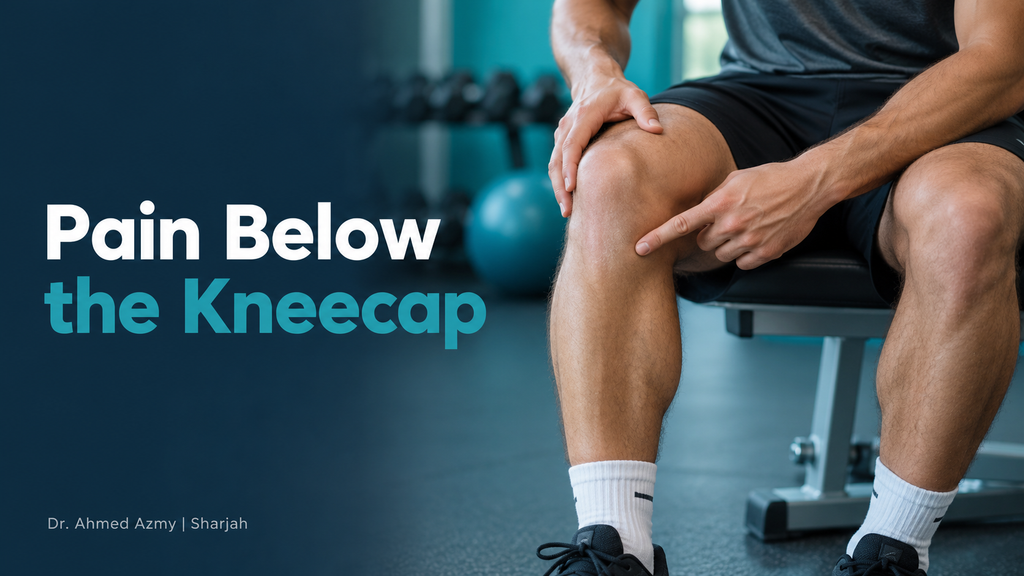
Patellar tendon pain is usually focused just below the kneecap. Symptoms may become more noticeable as the demands on the tendon increase.
- Pain or tenderness near the lower edge of the kneecap.
- Discomfort at the start of exercise or after a demanding session.
- Pain with stairs, squatting or rising from a chair as symptoms progress.
- Stiffness after sitting or resting.
| Feature | Possible patellar tendon problem | Reason to check for another cause |
|---|---|---|
| Pain location | A relatively focused point below the kneecap | Pain behind the knee, along a joint line or spread around the whole joint |
| Common trigger | Jumping, landing, sprinting or loaded knee extension | A twist, direct blow or prolonged kneeling |
| Pattern | Gradual onset linked to repeated load | Sudden marked swelling, true locking or the knee giving way |
This comparison is a guide to assessment, not a way to diagnose yourself. Pain around or behind the kneecap can also occur with patellofemoral pain. A painful swelling directly over the front of the knee may suggest a different problem, including knee bursitis. If bending itself is the dominant symptom, see our guide to knee pain when bending.
Why does patellar tendon pain develop?
Patellar tendon pain can develop when repeated loading exceeds the tendon’s current capacity. Several factors may contribute.
- Repeated loading without enough recovery is a common factor.
- The risk may rise when a training plan suddenly adds more jumping, running, heavy leg exercises or sessions per week.
- Reduced strength in the thigh or hip muscles and limited ankle movement may also change how force passes through the knee.
- An assessment considers the full picture rather than blaming one movement or one pair of shoes.
For a recreational athlete in Sharjah, the key question may be: what changed just before the pain started? Training logs can reveal a recent increase in court time, a new plyometric class or repeated workouts on consecutive days. That detail can help shape a realistic rehabilitation plan. NHS physiotherapy guidance describes gradual load progression and strengthening as core parts of care for patellar tendinopathy.
How is patellar tendonitis diagnosed?
Diagnosis begins with your symptoms and a clinical examination. The clinician checks whether the patellar tendon or another knee structure is involved.
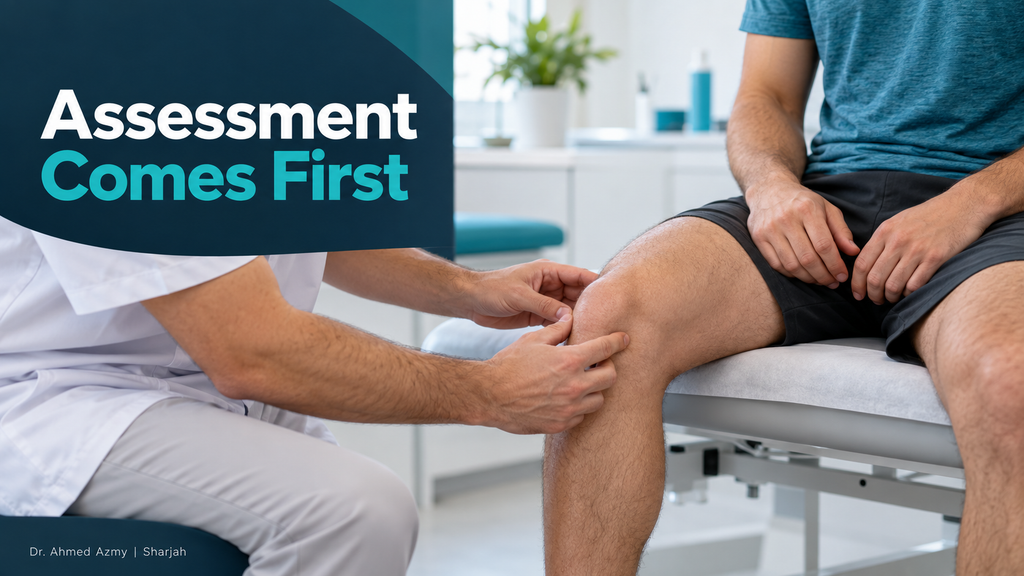
- A clinician will ask when the pain began, what movements reproduce it, whether training recently changed, and whether there was a specific injury.
- The examination usually checks tenderness below the kneecap, knee movement, strength and how your knee responds to controlled loading.
- The clinician may also assess the hip and ankle and look for signs of a different condition.
- Imaging is not automatically required.
- An X-ray may help rule out a bone problem; ultrasound or MRI may be considered when the diagnosis is uncertain, symptoms persist, or a significant tendon injury is suspected.
- The decision should follow the clinical examination.
Clinical reference: Mayo Clinic outlines the diagnostic role of examination and imaging
When should you seek prompt assessment?
Persistent symptoms deserve assessment. Sudden injuries and certain warning signs need more urgent attention.
- Arrange an assessment if pain persists, worsens or interferes with walking and daily tasks.
- Seek urgent evaluation if you cannot bear weight or actively straighten the knee after an injury.
- Seek urgent evaluation for pronounced swelling or a visible change in knee shape.
- A hot, red knee with fever needs urgent medical evaluation.
These signs require evaluation for problems beyond routine tendon overload.
Patellar tendonitis treatment: what usually comes first?
The first goal is to reduce the activities that repeatedly provoke the tendon without assuming complete bed rest is the solution. Your clinician or physiotherapist may suggest temporarily cutting back on jumping, sprinting or heavy knee loading while you maintain tolerable activity. A brief period of icing after aggravating activity may help symptoms, but it does not replace rehabilitation.
A typical plan includes:
- Adjust the load. Review training frequency, intensity and painful exercises. Replace high-impact sessions temporarily if appropriate.
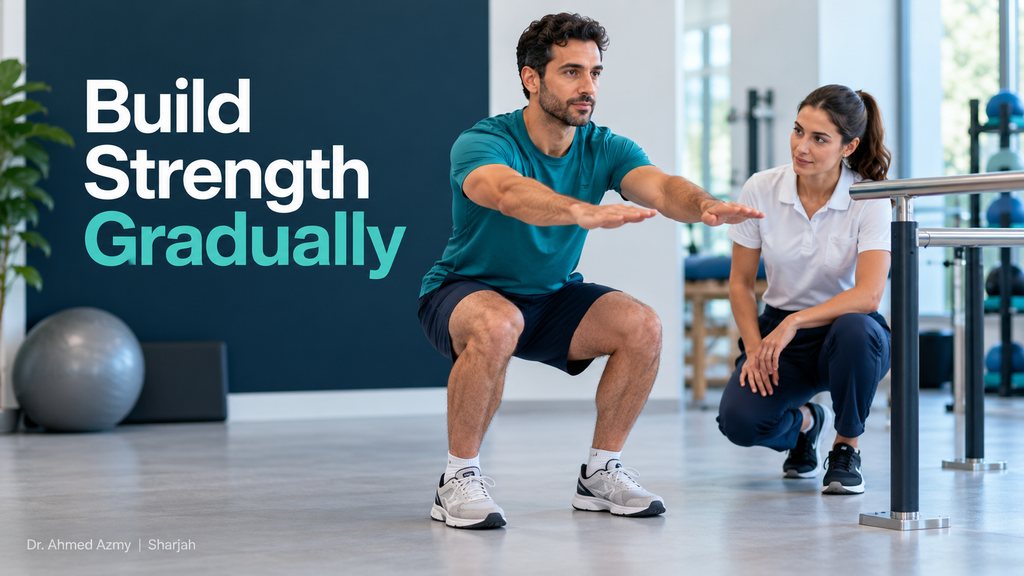
- Build strength progressively. A physiotherapist may start with tolerable static exercises and progress to controlled squats, heavier strengthening, then faster movements. The next stage depends on pain during exercise and how the knee feels afterward.
- Address contributing factors. Work on relevant quadriceps, hip or calf strength and movement control; review return-to-training habits.
- Reassess the response. If progress stalls, confirm the diagnosis and adjust the programme rather than simply pushing through worsening pain.
Some people ask about pain medicines, straps, injections or surgery. A strap may ease symptoms for certain activities, and medication may offer short-term pain relief, but suitability depends on medical history. Evidence and risks for injections vary; corticosteroid injections near the tendon require particular caution because they can weaken tendon tissue. Surgery is rarely the first option and is considered only in selected persistent cases after appropriate assessment and rehabilitation. Discuss these choices with a qualified clinician rather than treating them as interchangeable shortcuts. Mayo Clinic reviews treatment options and their limits.
How long does recovery take, and when can you return to sport?
There is no single recovery deadline. Recent, mild symptoms may improve sooner than longstanding pain. Strength and load tolerance often take weeks to months to rebuild. These phases describe a general progression, not a fixed weekly schedule.
Manage aggravating load
Start by finding a level of activity the knee can tolerate.
- Modify painful jumping, sprinting or heavy knee loading.
- Maintain suitable daily movement and begin clinician-guided exercises.
Rebuild strength
Progress strengthening according to symptoms and function.
- Build relevant knee, hip and calf strength.
- Check how the knee feels afterward before increasing the demands.
Reintroduce running and jumping
Introduce higher demands gradually when strength and symptoms allow.
- Progress controlled running, landing and jumping tasks.
- Reduce or adjust demands if symptoms significantly worsen.
Return to sport-specific training
Work toward the repeated loads required for your sport.
- Practise sport-specific drills, including changes of direction where relevant.
- Review tolerance with your clinician before full training.
For a basketball player, one comfortable squat does not establish readiness for repeated landings. Progress should follow function and symptom response rather than the calendar alone.
Patellar tendon pain in sports
Jumping, landing and repeated acceleration place demands on the patellar tendon. Basketball, volleyball, football and running can contribute to overload, particularly when training increases suddenly. Assessment should consider both knee symptoms and the movements required for a gradual return to sport.
Explore the clinic’s sports injury services for information about arranging an assessment in Sharjah.

Knee care in Sharjah with Dr. Ahmed Azmy
If pain below your kneecap is limiting training or daily movement, Dr. Ahmed Azmy can assess the source of pain and discuss a treatment route suited to your activity goals. An appointment should clarify whether the tendon is involved, whether another knee condition needs attention and how to progress safely. Learn more about the clinic’s knee treatment services in Sharjah and care for overuse injuries.
Ready for a clear plan? Book an orthopedic consultation and describe where the pain is, when it started, and which activities make it worse.
Frequently asked questions
1. Is patellar tendonitis the same as jumper’s knee?
Yes. Jumper’s knee is a common name for pain related to the patellar tendon. The term patellar tendinopathy is also used, particularly for persistent load-related symptoms.
2. Can you have patellar tendonitis without playing sports?
Yes. Jumping sports are a familiar trigger, but a sudden rise in running, gym training or other repeated knee loading can also contribute.
3. Where is the pain from patellar tendonitis felt?
It is usually focused just below the kneecap, near the upper part of the tendon. Pain elsewhere in the knee may point to another cause and deserves an individual assessment.
4. Should I stop exercising completely?
Not necessarily. Many people can continue modified activity while temporarily reducing movements that aggravate the tendon. A physiotherapist can guide safe loading based on your symptoms.
5. Does jumper’s knee need an MRI?
Not in every case. Clinical history and examination often guide the initial diagnosis. Imaging may be helpful when the diagnosis is unclear, symptoms persist or a more serious injury is suspected.
6. Are patellar tendonitis and patellofemoral pain the same?
No. They can both cause pain at the front of the knee, but patellar tendon pain tends to be more focused below the kneecap. An examination is needed to distinguish them reliably.
7. How long does patellar tendonitis take to heal?
Recovery varies with how long symptoms have been present, tendon load and response to rehabilitation. Progressive strengthening often takes weeks to months; a clinician can set milestones for your circumstances.
8. When should I see a knee specialist in Sharjah?
Book an assessment if the pain continues, worsens or limits training or daily activity. Seek urgent evaluation after a sudden injury with major swelling, inability to bear weight or inability to straighten the knee.