Knee Joint Pain Medicine & Expert Relief with Dr. Ahmed Azmy
Knee pain has a way of changing how you live your life. Whether it is a sharp, sudden twinge when walking through...
Knee pain has a way of changing how you live your life. Whether it is a sharp, sudden twinge when walking through Sahara Centre or a dull, lingering ache that makes descending the stairs at home a daily trial, it is something you cannot ignore. Every step counts, and when your joints are not cooperating, finding the right knee joint pain medicine becomes your top priority.
Understanding your choices is key to reclaiming your mobility, whether you are dealing with chronic wear-and-tear or a recent injury. However, medication is only a single piece of a much larger puzzle. To truly get your life back on track, you need an accurate diagnosis and a customized strategy designed by an expert who truly understands musculoskeletal care.
What Does Knee Pain Look Like?
Knee discomfort rarely shows up the exact same way for two different people. For some, it is a constant, throbbing ache that makes it hard to fall asleep. For others, it is a localized, sharp sensation that only flares up during specific movements.
Common symptoms often associated with structural joint issues include:
- A grinding, popping, or clicking sound (crepitus) during movement.
- Visible swelling, redness, or a joint that feels warm to the touch.
- An inability to completely straighten or bend the lower leg.
- A feeling of instability, as if the knee might buckle under your weight.
Paying close attention to these patterns can help an orthopedic specialist determine what is going on beneath the surface. For example, experiencing sharp knee pain when bending frequently points toward an issue with the kneecap tracking or meniscus health.
What Causes Knee Pain?
To find an effective remedy, you must first understand the root knee pain reasons. The human knee is a complex, weight-bearing hinge joint made up of bones, cartilage, ligaments, and tendons working together. When any of these structures become irritated, damaged, or overused, discomfort is inevitable.
The most common knee pain causes generally fall into three distinct categories:
1. Chronic Mechanical Conditions
- Patellofemoral Pain Syndrome: Often referred to as “runner’s knee,” this condition commonly causes knee pain after starting a new workout, especially when suddenly increasing running distance, squatting frequency, or high-impact training before the surrounding muscles are fully conditioned.
- Osteoarthritis: The gradual breakdown of protective cartilage that cushions the ends of your bones, leading to painful friction under load.
2. Acute Structural Injuries
- Meniscus Tears: Damage to the tough, rubbery shock-absorber cartilage that sits between your shinbone and thighbone, often triggered by twisting.
- Knee Ligament Injury: Sprains or complete tears affecting the ACL (anterior cruciate ligament) or MCL (medial collateral ligament), which can significantly destabilize the joint and lead to acute pain, swelling, and a feeling of giving way.
3. Inflammatory Issues
- Bursitis: Inflammation of the small, fluid-filled sacs (bursae) that reduce friction between your joint tissues.
- Tendonitis: Irritation and inflammation of the thick cords that attach your muscles to your bones, such as the patellar tendon.
How Can Dr. Ahmed Azmy Diagnose the Problem Behind Knee Joint Pain?
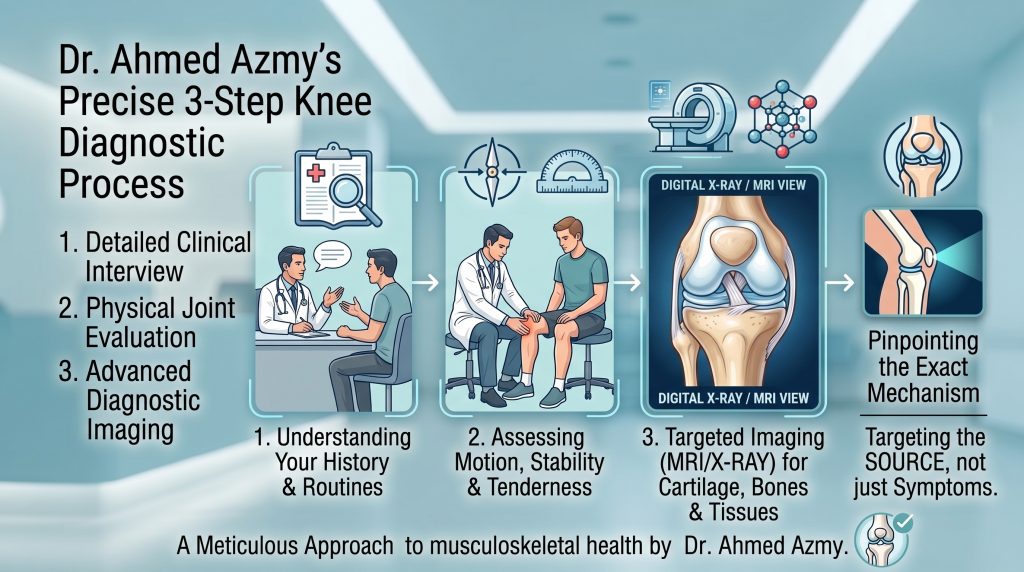
You should never have to guess about the underlying cause of your physical discomfort. A proper medical evaluation is essential before beginning any medication regimen or considering advanced non-surgical orthopedic treatments. Dr. Ahmed Azmy approaches joint diagnostics with meticulous care, combining clinical experience with modern diagnostic technologies to build targeted, non-surgical relief plans.
During a consultation, the diagnostic process involves:
- A Detailed Clinical Interview: Discussing your medical history, daily routines, and when the pain feels most intense.
- A Physical Evaluation: Safely testing your range of motion, joint stability, and localized tenderness.
- Advanced Diagnostic Imaging: Utilizing targeted digital X-rays or high-resolution MRI scans to view the cartilage, bones, and soft tissues clearly.
By pinpointing the exact mechanism behind your symptoms, Dr. Ahmed Azmy ensures your treatment path targets the actual source of your pain rather than simply masking it temporarily.
Exploring Knee Joint Pain Medicine Options
When it comes to managing symptoms and reducing local inflammation, choosing the correct knee joint pain medicine can make a significant difference in your daily comfort. These interventions generally fall into a few primary categories, ranging from over-the-counter options to specialized medical treatments.
1. Oral Pain Relievers & Anti-Inflammatories
Oral medications are often the first line of defense for managing daily discomfort:
- Analgesics: Over-the-counter options like acetaminophen can help reduce mild to moderate pain signals without targeting inflammation directly.
- NSAIDs (Non-Steroidal Anti-Inflammatory Drugs): Medications such as ibuprofen or naproxen help lower both swelling and pain, making them highly effective for arthritis or tendonitis flare-ups.
2. Topical Treatments
For those who prefer targeted relief or wish to avoid the systemic side effects of oral medications, over-the-counter knee pain medicine applied directly to the skin can be highly beneficial:
- Topical NSAID Gels: Gels containing diclofenac penetrate directly through the skin into the joint tissue to reduce localized inflammation.
- Capsaicin Creams: Derived from hot peppers, these creams help temporarily block local pain messengers in the joint area.
- Counterirritants: Creams featuring menthol or camphor provide cooling or warming sensations that help distract your brain from the underlying ache.
3. Prescription & In-Office Treatments
When standard over-the-counter choices do not provide enough relief, advanced medical interventions may be necessary:
- Prescription-Strength NSAIDs: Powerful, targeted anti-inflammatory drugs prescribed for severe structural flare-ups.
- Corticosteroid Injections: Administered directly into the knee joint to provide rapid, substantial relief from intense swelling and severe pain.
- Hyaluronic Acid Injections: Often called viscosupplementation, this gel-like fluid mimics the body’s natural joint lubricants to improve smooth movement.
4. Best Joint Supplement for Knees
Many individuals incorporate daily dietary supplements alongside their medical treatments to support long-term joint health:
- Glucosamine and Chondroitin: Structural components of natural cartilage that may help slow down joint wear over time.
- Omega-3 Fatty Acids: High-quality fish oils known for their natural anti-inflammatory properties.
- Turmeric and Curcumin: Plant-based extracts celebrated for their natural ability to help soothe joint irritation.
Holistic Approaches
Some individuals also explore traditional options, such as incorporating specific herbal elements or seeking an ayurvedic medicine for knee joint pain to complement their routines. While natural options like Boswellia (shallaki) or ginger can offer mild anti-inflammatory support, they should always be discussed with your physician to ensure they do not conflict with your primary medical treatments.
Actionable Home Remedies for Knee Joint Pain
While waiting for your specialist appointment, structured home care can help manage sudden flare-ups and reduce local tissue stress:
- The R.I.C.E. Principle:
- Rest: Give your joint a break from high-impact activities.
- Ice: Apply a cloth-covered ice pack for 15–20 minutes several times a day to reduce swelling.
- Compression: Wear a supportive, breathable elastic sleeve to control fluid retention.
- Elevation: Prop your leg up on pillows whenever you are resting to encourage fluid drainage.
- Low-Impact Movement: Avoid complete immobility, which can lead to joint stiffness. Gentle swimming or stationary cycling can keep the joint moving safely without bearing heavy impacts.
- Weight Management: Reducing even a small amount of body weight significantly decreases the physical pressure placed on your weight-bearing joints with every step you take.
How to Avoid Knee Arthritis
Preventing long-term cartilage degradation requires proactive care and a commitment to healthy joint habits:
- Strengthen the Supporting Muscles: Focus on building up your quadriceps, hamstrings, and calf muscles. Strong leg muscles act like a natural bracing system, absorbing impact forces before they reach your cartilage.
- Incorporate Low-Impact Cardio: Trade high-impact concrete running for joint-friendly options like elliptical training, cycling, or swimming to keep your cartilage nourished without excessive wear.
- Wear Supportive Footwear: Choose shoes that offer proper arch support and shock absorption to help keep your lower body alignment neutral.
How to Choose the Best Doctor for Knee Pain
Your joints are vital to your independence and quality of life, which means you should only trust them to a highly qualified professional. When searching for the right specialist, look for an expert who offers a comprehensive approach to care:
- Specialized Orthopedic Expertise: Ensure your doctor focuses specifically on advanced bone, joint, and soft tissue treatments.
- A Patient-First Philosophy: Look for a physician who takes the time to listen to your unique concerns and explains your treatment options clearly.
- Comprehensive Treatment Options: Choose a practitioner who prioritizes conservative management, lifestyle adjustments, and targeted medication before considering surgical paths.
Dr. Ahmed Azmy: The Best Knee Specialist in Sharjah
If you are looking for top-tier orthopedic care, Dr. Ahmed Azmy stands out as a premier choice for patients in Sharjah seeking lasting relief from debilitating joint conditions.
With a practice built on medical expertise, empathetic communication, and tailored treatment plans, he ensures every patient receives individual attention. Rather than relying on generic, one-size-fits-all options, his clinic focuses on precise diagnosis, advanced pain management strategies, and long-term joint preservation to help you return to the activities you love most.
Take the First Step Toward Pain-Free Living
You do not have to let persistent joint stiffness dictate your schedule or limit your time with family. Reclaiming smooth, comfortable movement starts with getting a clear, expert assessment of your joint health.
If you are ready to find a lasting solution, visit the official website of Dr. Ahmed Azmy today to explore advanced treatment options, learn more about specialized therapies, and easily book your comprehensive clinical consultation.
Frequently Asked Questions (FAQs)
Why do I have knee pain?
Knee discomfort can stem from many different factors, including acute structural injuries like a ligament sprain, chronic wear-and-tear conditions like osteoarthritis, or local tendon inflammation from repetitive overuse. A professional clinical examination and imaging are required to find the exact cause.
How to ease knee pain?
You can manage mild flare-ups by resting the joint, applying ice packs for 20 minutes at a time, using a supportive compression sleeve, and elevating your leg. Combining these steps with topical anti-inflammatory gels can provide effective temporary relief.
Which medicine is best for knee pain?
The most effective medication depends entirely on your specific diagnosis. Over-the-counter NSAIDs (like ibuprofen) are highly effective for swelling and inflammation, while acetaminophen is suitable for simple pain management. For severe or chronic issues, prescription-strength options or targeted joint injections may be required.
How to remove knee pain fast?
For rapid relief from acute swelling and pain, the R.I.C.E. method combined with a topical or oral anti-inflammatory medication is generally the fastest home approach. If the pain is severe or accompanied by an inability to bear weight, you should seek immediate medical evaluation.
Conclusion
Dealing with joint issues can feel overwhelming, but finding the right knee joint pain medicine and treatment plan can help you regain your active lifestyle. From simple over-the-counter solutions to advanced, in-office medical therapies, there are many effective ways to manage your symptoms and protect your long-term mobility.
Do not wait for mild discomfort to turn into a chronic barrier to your freedom. Partnering with a dedicated specialist like Dr. Ahmed Azmy ensures you get a personalized, expert plan designed to target your pain at its source. Reach out to schedule an appointment today and take your first confident step toward a healthier, more active future.
Book an appointment now with Dr Ahmed Azmy in Sharjah.

References
- Arthritis Foundation: arthritis.org
- American Academy of Orthopaedic Surgeons: aaos.org
- Mayo Clinic – Medical Information: mayoclinic.org
- Cleveland Clinic – Health Library: my.clevelandclinic.org