Tennis Elbow Treatment: Symptoms, Diagnosis and Recovery
Tennis elbow is a load-related condition affecting the tendons that attach the wrist-extensor muscles to the outside of the elbow. Despite its...
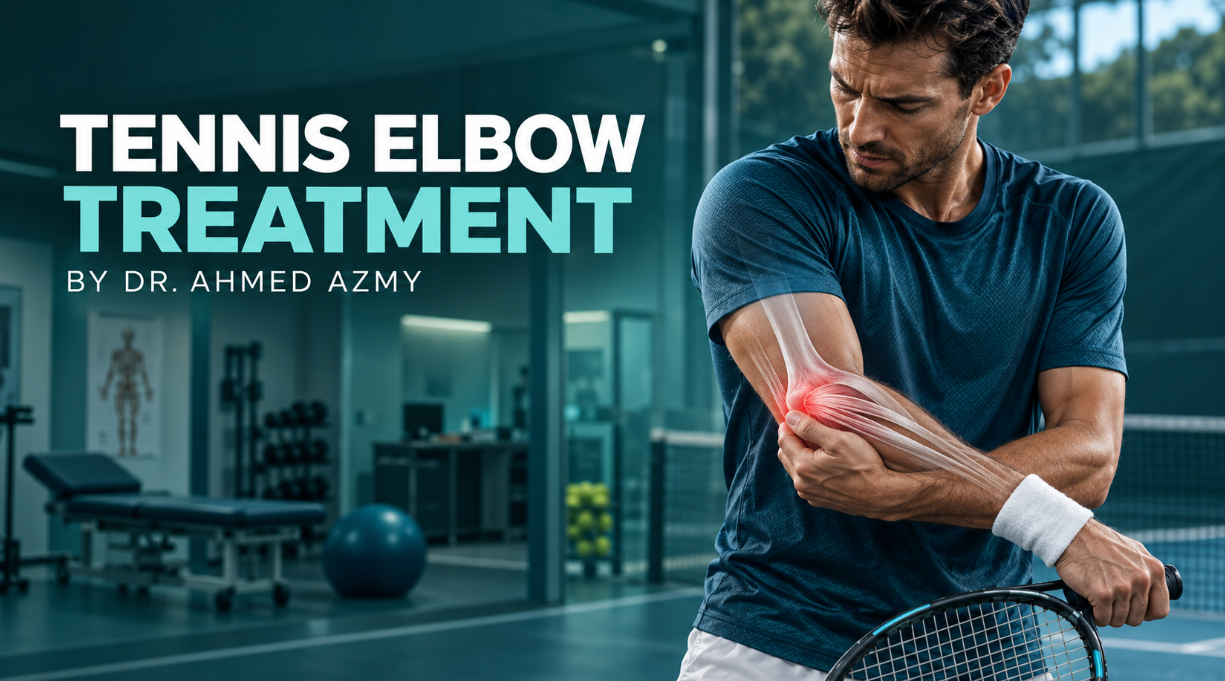
Tennis elbow is a load-related condition affecting the tendons that attach the wrist-extensor muscles to the outside of the elbow. Despite its name, it is not limited to tennis players. Repeated gripping, lifting, racket sports, gym training, manual work, and prolonged tool or computer use can all overload the area. Effective tennis elbow treatment usually combines temporary load adjustment with progressive exercise rather than complete rest alone.
Outer elbow pain can also come from the joint, a ligament injury, nerve irritation, or pain referred from the neck. Seek assessment after significant trauma, if the elbow is deformed or locked, or when numbness, progressive weakness, marked swelling, redness, or fever is present. Patients in Sharjah and across the UAE can book an orthopedic consultation with Dr. Ahmed Azmy for diagnosis and an individual recovery plan.
What Is Tennis Elbow?
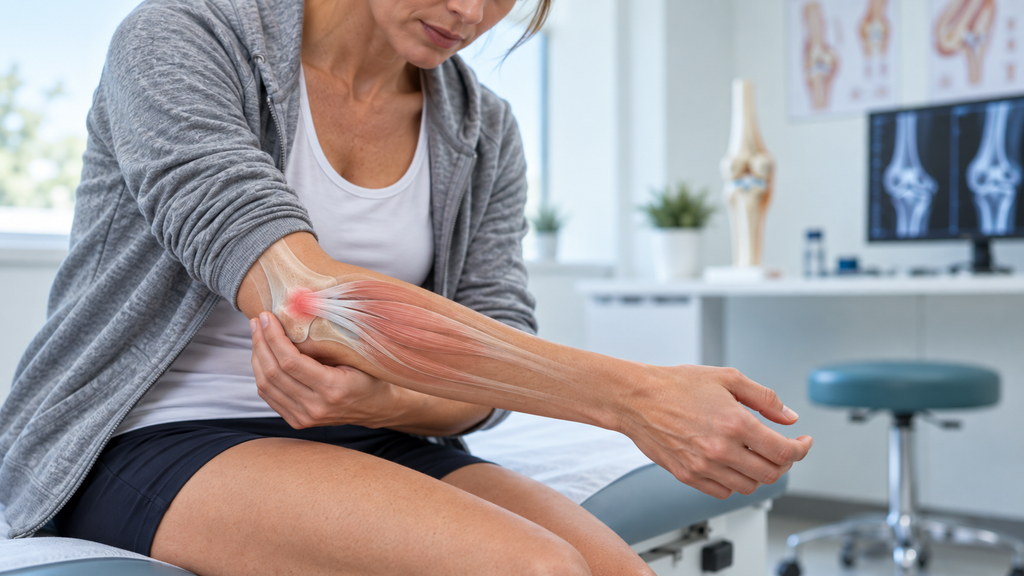
Tennis elbow is also called lateral elbow tendinopathy or lateral epicondylitis, and it stands as one of the most common sports injuries affecting both athletes and active individuals. The common extensor tendon begins near the lateral epicondyle, the bony point on the outside of the elbow. The extensor carpi radialis brevis is frequently involved because it helps stabilise the wrist during gripping and repeated hand activity.
The older term “epicondylitis” suggests inflammation, but persistent cases are often better understood as a tendon load-capacity problem with structural change. This distinction matters: simply trying to suppress inflammation may not restore the tendon’s ability to tolerate work, sport, and gripping.
Tennis Elbow Symptoms
- Pain or burning over the bony outer elbow, sometimes spreading down the forearm.
- Pain when gripping a racket, carrying a bag, shaking hands, opening a jar, or lifting with the palm down.
- Reduced grip strength or dropping objects because gripping is painful.
- Tenderness just below or in front of the lateral epicondyle.
- Pain with resisted wrist extension or lifting the middle finger against resistance.
- Stiffness after rest or a symptom flare after repeated work or training.
Symptoms commonly build gradually, although a sudden increase in workload can trigger a sharper onset. Pain intensity does not always reflect the amount of tendon change, so treatment decisions should consider function and loading tolerance as well as discomfort.
What Causes Tennis Elbow?
Tennis elbow typically develops when physical demand on the forearm increases faster than the tendon can adapt, making it one of the most common overuse injuries seen in active individuals. Rather than stemming from a single “bad movement,” the condition is driven by repetitive or sustained gripping paired with wrist extension or forearm rotation across daily, occupational, and athletic activities.
-
Racquet Sports & Athletics: Using a new racquet, tighter strings, improper stroke timing, or abruptly increasing heavier gym workloads.
-
Repetitive Work & Daily Tasks: Frequent screwdriver use, painting, lifting or carrying, prolonged food preparation, and extended mouse use.
-
Workload & Recovery Balance: High volume or intensity of arm tasks without sufficient rest and tissue recovery between sessions.
-
Individual Physical Capacity: Reduced shoulder or wrist stability, incorrect movement mechanics, and poor grip size or unsuitable equipment.
-
Systemic & Health Factors: Poor sleep quality, overall health status, and a history of previous forearm or elbow symptoms affecting tendon tolerance.
Is It Tennis Elbow or Another Cause?
Not all outer elbow pain stems from tennis elbow; nerve compression, joint pathology, cervical spine issues, and ligament injuries can produce overlapping symptoms. Distinguishing between these conditions ensures targeted care and helps identify red flags that require prompt clinical evaluation.
| Condition | Typical pattern | Clue that needs assessment |
| Tennis elbow | Local outer-elbow pain with gripping and resisted wrist extension | Persistent loss of grip or unclear examination |
| Radial tunnel or nerve irritation | Aching farther down the outer forearm; possible pain with nerve-loading tests | Numbness, tingling or progressive weakness |
| Elbow joint injury | Deeper joint pain, catching, locking, swelling or motion loss | Trauma, inability to fully move the elbow |
| Cervical referred pain | Neck or shoulder symptoms with pain travelling into the arm | Neurological symptoms or changing reflexes/strength |
| Ligament injury | Pain or instability after throwing, impact or forceful stress | Acute trauma, instability or significant swelling |
| Inflammatory or infectious cause | Warmth, redness, marked swelling or multiple painful joints | Fever or rapidly worsening symptoms |
How Is Tennis Elbow Diagnosed?

Diagnosing tennis elbow is primarily clinical, relying on a detailed medical history and hands-on physical tests rather than automatic scans. Following clinical standards, such as those from the American Academy of Orthopaedic Surgeons (AAOS), imaging is reserved for ruling out other conditions, investigating trauma, or evaluating cases that fail to improve.
-
Medical History Review: Evaluating symptom onset, aggravating movements, recent changes in athletic or workplace demands, and ruling out red flags like neck pain, numbness, prior trauma, or joint locking.
-
Physical Examination: Assessing localized tendon tenderness, grip strength, elbow and wrist range of motion, resisted wrist extension, and relevant nerve or cervical spine function.
-
X-Ray Imaging: Used selectively to evaluate bone structure, rule out arthritis, or check for underlying osseous pathology after acute trauma.
-
Ultrasound & MRI Scans: Employed when presentations are atypical, a significant tendon tear is suspected, or pain persists despite conservative rehabilitation.
Tennis Elbow Treatment Options
The best plan matches treatment to symptom irritability, work demands, sporting goals, and the duration of the condition. Most people begin with nonsurgical care. Treatment is not a single technique; it is a progression that reduces unnecessary aggravation while rebuilding capacity.
1. Modify Load Without Stopping Everything
Temporarily reduce the movements that cause a strong or lasting flare: heavy gripping, repeated wrist extension, high-volume backhand practice, or lifting with the palm down. Changing handle size, tool position, lifting technique, work breaks, or training volume may keep the person active without repeatedly overloading the tendon. Prolonged complete rest can reduce strength and does not prepare the arm to return to demand.
2. Manage Pain Appropriately
A wrapped cold pack may help after a flare, while some people prefer warmth before movement. Topical or oral pain medicines are not appropriate for everyone; discuss them with a clinician or pharmacist, particularly with stomach ulcers, kidney disease, anticoagulant use, pregnancy, cardiovascular conditions, or medication interactions. Pain relief should support activity modification rather than hide symptoms during heavy loading.
3. Use Progressive Exercise
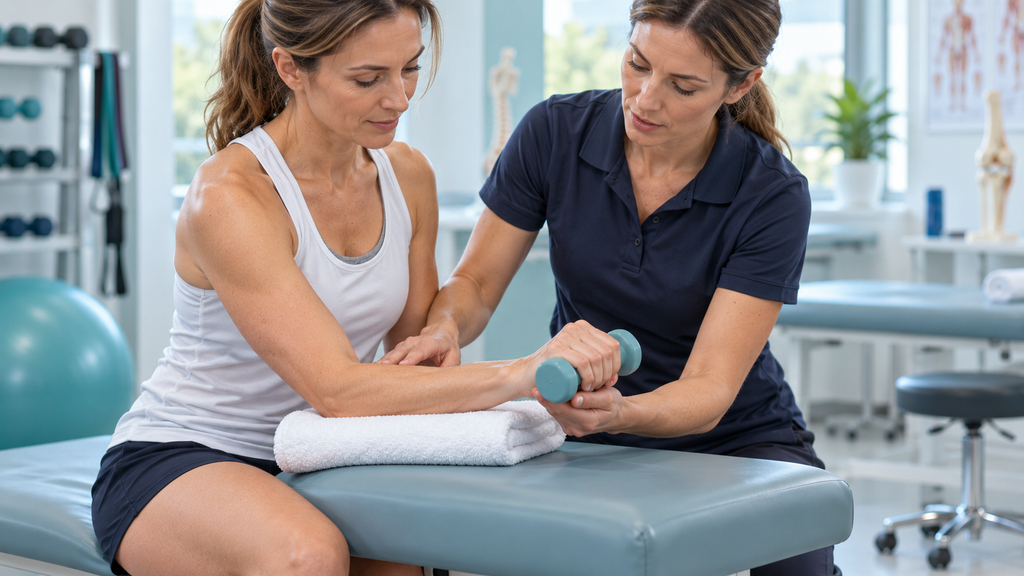
Rehabilitation may begin with comfortable isometric wrist-extension holds, then progress to slow resisted wrist extension and forearm rotation. Grip, shoulder, and upper-limb strength may also be trained when deficits are relevant. Exercise dosage should be adjusted to the response during the session and over the following day; sharp or escalating pain is a reason to reduce load and reassess technique.
The clinical practice guideline for lateral elbow pain supports resisted exercise for the wrist extensor muscles, with treatment selected according to the patient’s impairments and functional demands.
4. Consider a Brace Selectively
A counterforce strap worn below the elbow or a wrist support may reduce symptoms during selected tasks for some people. It should fit comfortably without numbness, skin pressure, or increased pain. A brace is an aid, not a replacement for load management and strengthening.
5. Review Persistent Symptoms
If progress stalls, the diagnosis, exercise dose, work exposure, technique, neck and nerve findings, and adherence should be reviewed before simply adding procedures. Shockwave therapy or injections may be discussed in selected cases, but benefits, limitations, and possible recurrence or adverse effects vary. A specialist should explain why a procedure is being considered and what rehabilitation still needs to follow.
Do Steroid or PRP Injections Cure Tennis Elbow?
No injection guarantees a cure. Corticosteroid injection may provide short-term relief for some patients, but short-term improvement does not necessarily mean better long-term tendon capacity, and recurrence is a consideration. Evidence for platelet-rich plasma is mixed and results depend on preparation, technique, patient selection, and comparison treatment. Neither option should be presented as universally effective.
An injection discussion should follow a confirmed diagnosis and include expected benefit, uncertainty, cost, risks, and the continuing role of rehabilitation. An individual who has not yet completed a well-designed loading programme may have a different decision from someone with persistent, function-limiting symptoms despite appropriate care.
When Is Surgery Considered?
Surgical intervention for tennis elbow is uncommon and considered only after conservative therapies have been thoroughly exhausted. It is reserved for carefully evaluated individuals who face ongoing functional disability and require an in-depth clinical review before proceeding.
-
Persistent Symptoms & Limitations: Reserved for individuals experiencing chronic pain and functional impairment that fail to improve after an adequate course of nonsurgical management.
-
Diagnostic Re-Evaluation: Requiring a complete reassessment of the initial diagnosis to rule out competing or alternative causes of lateral elbow pain.
-
Risk vs. Benefit Analysis: Carefully balancing the anticipated benefits of surgery against operative risks and the commitment required for postoperative recovery and rehabilitation.
Returning to Tennis, Gym Training or Work
Return should be based on capacity rather than a fixed date. Daily comfort is not enough if the arm still cannot tolerate repeated gripping, lifting, or racket impact. Increase duration before intensity, and avoid raising several variables—weight, repetitions, speed, and frequency—at the same time.
| Checkpoint | Practical sign of readiness |
| Daily tasks | Dressing, typing and light carrying without a meaningful flare |
| Grip | Firm grip tolerated with improving confidence and side-to-side strength |
| Wrist loading | Progressive wrist-extension and rotation exercises completed with acceptable response |
| Sport or work drill | Racket swings, lifting patterns or tool use reintroduced step by step |
| Volume tolerance | Repeated activity completed without worsening technique or escalating pain |
| Next-day response | No important increase in pain, stiffness or loss of function after loading |
How to Reduce the Risk of Recurrence
Build gripping and wrist-loading volume gradually, especially after a break. Review racket grip size, string tension, stroke technique, workstation setup, tool handles, lifting position, and rest breaks where relevant. Continue forearm, grip, shoulder, and upper-back strength after symptoms improve instead of stopping rehabilitation at the first pain-free week.
For broader preparation and workload guidance, read how to prevent sports injuries. The clinic’s tendon injury treatment page explains the wider diagnostic and treatment pathway for tendon conditions without replacing this condition-specific guide.
Book an Elbow Assessment in Sharjah
Persistent outer-elbow pain can affect sport, gym training, work, and simple daily tasks. Dr. Ahmed Azmy provides orthopedic and sports injury assessment in Sharjah for active adults and athletes across the UAE. Book an appointment for specialized sports injury care with Dr. Ahmed Azmy in Sharjah diagnosis-led tennis elbow treatment and a progressive return-to-activity plan.
Book an appointment now with Dr Ahmed Azmy in Sharjah.