Patient Connection Hub Assess your pain

Ayurvedic Medicine for Knee Pain: Real Relief in Sharjah?

← Back to All Blogs
ayurvedic medicine for knee pain

Living in Sharjah means navigating a vibrant, fast-paced environment—whether you are walking through the beautiful Al Majaz Waterfront, shopping at the Central Souq, or managing a demanding career. However, when persistent knee discomfort strikes, even simple daily movements can feel like a monumental challenge. If you are seeking a natural, holistic approach to healing, exploring ayurvedic medicine for knee pain can offer profound, long-lasting relief.

Ayurveda does not merely mask joint distress; it targets the underlying imbalances within the body to restore fluid mobility. For residents across the UAE struggling with structural joint issues, combining the ancient wisdom of Eastern medicine with modern orthopedic expertise provides the ultimate path to recovery. Navigating these options with a trusted specialist like Dr. Ahmed Azmy ensures you receive an accurate clinical assessment alongside your holistic recovery journey.

Knee Pain Types and Locations

Understanding the precise location and nature of your discomfort is the first step toward effective management. The human knee is a complex, weight-bearing hinge joint, and pain can manifest in several distinct areas:

  • Anterior Pain (Front of the Knee): Often centered around the kneecap (patella). This is frequently linked to runner’s knee, patellar tendonitis, or cartilage wear beneath the kneecap.
  • Posterior Pain (Back of the Knee): Commonly caused by fluid accumulation, such as a Baker’s cyst, or hamstring tendon strains.
  • Medial Pain (Inner Side): Usually points to meniscus tears or wear and tear affecting the inner compartment of the joint, highly common in structural osteoarthritis.
  • Lateral Pain (Outer Side): Frequently associated with Iliotibial (IT) band syndrome or lateral meniscus issues.

Whether your discomfort stems from sudden sports injuries, mechanical misalignment, or age-related degeneration, identifying the structural source allows for highly targeted care.

Other Knee Pain Associated Symptoms

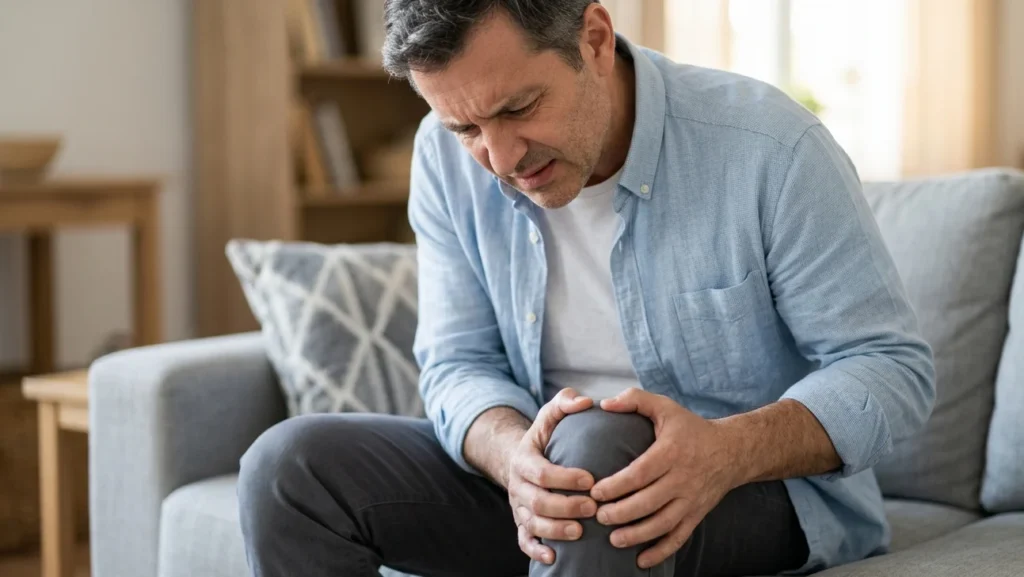
Knee issues rarely travel alone. Mechanical problems within the joint typically trigger a cascade of secondary symptoms that can severely limit your quality of life. Sharjah residents suffering from joint degradation often experience:

  • Localized Swelling and Redness: Signs of active inflammation within the synovial membrane.
  • Morning Stiffness: A classic indicator of joint wear, where the knee feels rigid for the first 30 minutes after waking up.
  • Popping, Clicking, or Grinding Noises: Mechanically known as crepitus, these sounds signal that cartilage has thinned, causing bone to rub against bone or tendons to snap over structural irregularities.
  • Inability to Fully Straighten or Bend the Joint: A restricted range of motion caused by structural blockages, severe swelling, or advanced tissue degradation.

Why Conventional Treatments May Not Be Enough?

When local residents experience joint distress, the standard response is often to reach for over-the-counter Non-Steroidal Anti-Inflammatory Drugs (NSAIDs) or seek temporary intra-articular injections. While these conventional methods offer quick symptomatic relief, they frequently fall short of providing a permanent solution for several reasons:

  1. Symptom Masking vs. Root Cause Healing: Painkillers turn off the alarm system without fixing the fire. They suppress pain signals but do not stop the progressive breakdown of joint cartilage.
  2. Adverse Side Effects: Prolonged use of conventional anti-inflammatory medications can lead to gastrointestinal complications, liver strain, and cardiovascular risks.
  3. Temporary Window of Relief: Cortisone injections may reduce swelling for a few weeks or months, but repeated use can actually weaken the local tendons and accelerate cartilage degeneration.

To achieve lasting comfort, treatment must go beyond temporary suppression and focus on tissue rejuvenation and structural alignment.

knee pain treatment​

Pathophysiology of Knee Pain in Ayurveda

Ayurveda views the human body through the lens of three elemental energies or Doshas: Vata (air and space), Pitta (fire and water), and Kapha (earth and water). Joint health relies heavily on a perfect balance between Vata (which governs movement) and Kapha (which provides lubrication and structural stability).

In ancient texts, chronic knee pain is primarily classified as Sandhivata (Osteoarthritis). When Vata dosha becomes aggravated due to aging, improper diet, or excessive stress, it introduces a drying quality into the body. This dries up the Shleshaka Kapha—the natural synovial fluid that lubricates the knee joint. Without this protective lubrication, friction increases, leading to the gradual erosion of cartilage, severe stiffness, and chronic discomfort.

Additionally, poor metabolic digestion can create Ama (toxic metabolic waste). When Ama circulates and settles into the weakened knee joint, it triggers inflammatory responses similar to rheumatoid arthritis.

The Key Treatment Strategies

Addressing joint issues through an Ayurvedic framework involves a multi-pronged approach designed to eliminate toxins, pacify the hyperactive Vata dosha, and restore the joint’s natural cushioning. The ultimate goal is to return functional balance to the musculoskeletal system through targeted, natural therapies.

  • Sodhana (Detoxification): Utilizing specific Panchakarma therapies to flush out deep-seated Ama (toxins) from the joint tissues.
  • Samana (Palliation): Employing powerful oral herbs and localized oil therapies to calm inflammation and relieve acute distress.
  • Rasayana (Rejuvenation): Nourishing the depleted bone and cartilage matrices to prevent future degeneration and restore long-term structural integrity.
knee joint pain medicine

Herbal Medicines and Supplements for Knee Pain

The botanical treasury of Ayurveda contains exceptional anti-inflammatory agents that match the efficacy of conventional pain relievers without the associated toxicity. Utilizing the best ayurvedic medicine for knee joint pain involves a synergistic blend of powerful herbs:

  • Shallaki (Boswellia serrata): Widely researched for its rich boswellic acids, this herb blocks the inflammatory enzymes that degrade joint tissue, significantly reducing pain and improving mechanical joint function.
  • Guggulu (Commiphora mukul): A potent resin renowned for its ability to clear toxins (Ama) from the joints, reduce swelling, and enhance deep tissue healing. Formulations like Yogaraj Guggulu are foundational for joint care.
  • Ashwagandha (Withania somnifera): An adaptogen that strengthens the surrounding muscles, reduces overall stress-induced inflammation, and promotes the structural recovery of bone tissue.
  • Turmeric (Curcumin): A globally recognized natural antioxidant that neutralizes free radicals within the synovial fluid, actively soothing painful flare-ups.

Topical Oils and Massage for Knee Pain

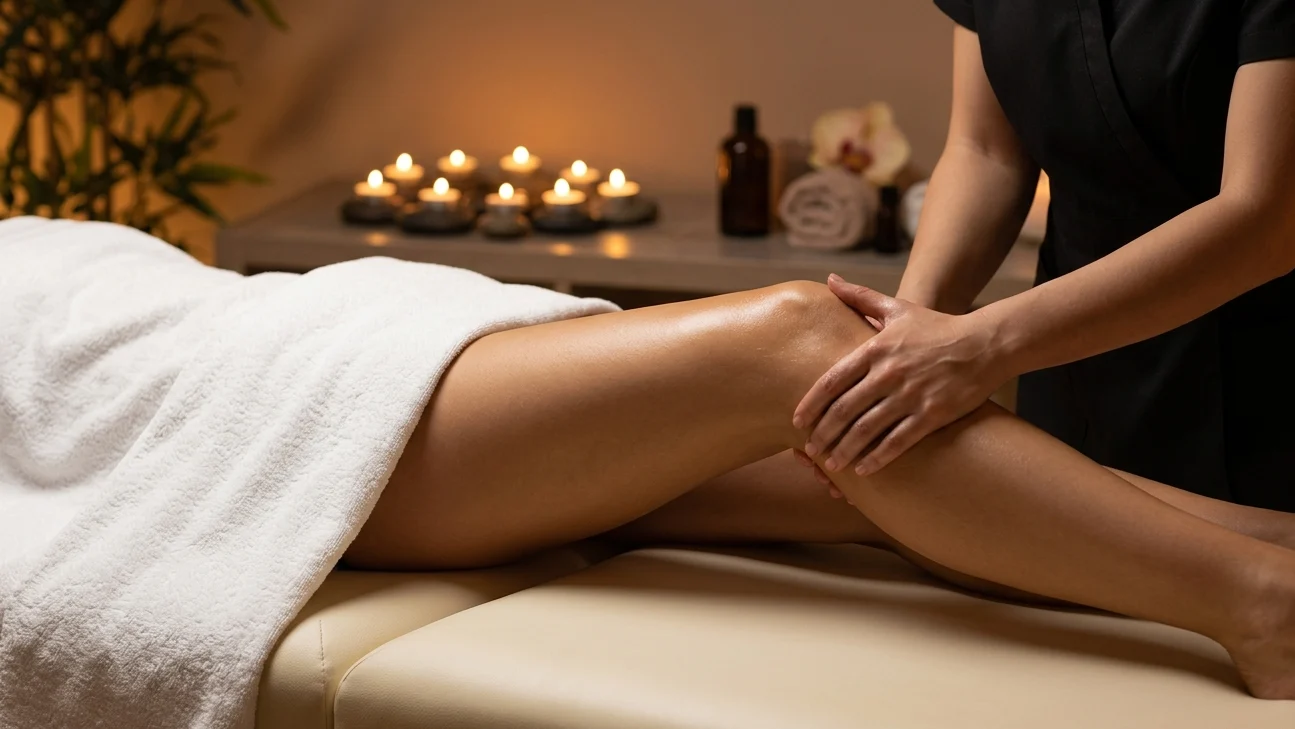
Local external therapies are vital for directly delivering nourishing properties to the starved knee joint. By applying targeted heat and medicated herbal oils, these therapies stimulate local blood circulation and soothe irritated nerves.

Janu Basti (Localized Oil Retention)

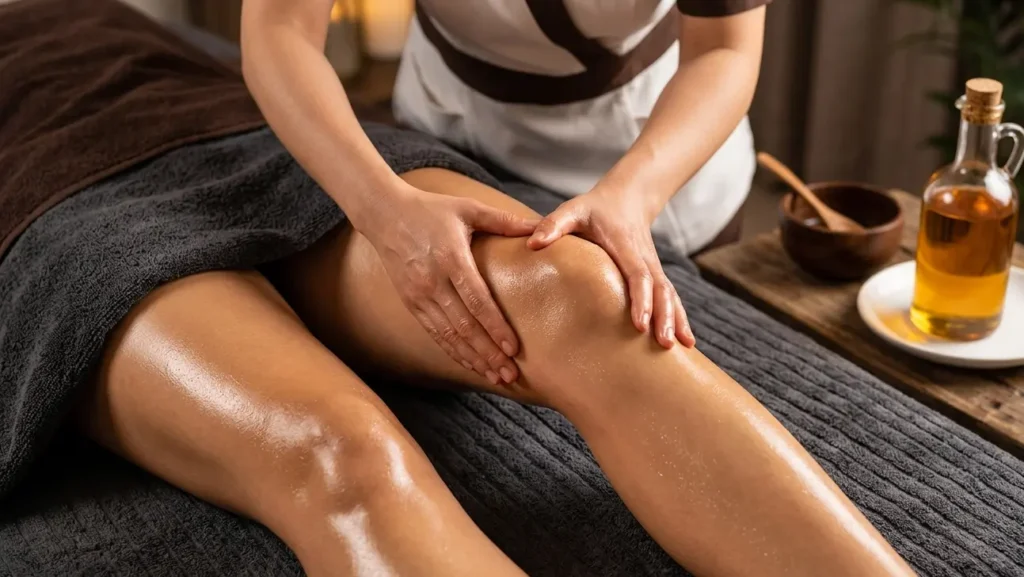
This specialized therapy involves building a circular reservoir or dam made of black gram dough around the affected knee. Warm, medicated Ayurvedic oils are poured into this enclosure and maintained at a specific temperature for 30 to 45 minutes. This deep-pooling method allows the healing herbs to penetrate deeply into the joint capsule, intensely lubricating the dried-up Shleshaka Kapha.

Medicated Abhyanga (Therapeutic Massage)

Massaging the joint gently with specific Vata-pacifying oils helps reduce stiffness and restore flexibility. The most effective traditional formulations include:

  • Mahanarayana Thailam: A classical blend of over 50 therapeutic herbs in a pure sesame oil base, highly effective for restoring movement to rigid joints.
  • Kottamchukkadi Thailam: Excellent for relieving acute swelling, numbness, and joint heaviness.
  • Murivenna: Renowned for its rapid tissue-healing acceleration, making it ideal if your joint pain is compounded by minor soft-tissue or ligament strain.

Learn more about your condition and connect with Dr Ahmed Azmy in Sharjah through the patient connection hub.

best knee pain relief cream​

Dietary Adjustments That Help in Knee Pain

Your digestive fire (Agni) directly influences your systemic inflammation levels. To keep Vata dosha balanced and stop the accumulation of joint-damaging toxins, a carefully structured diet is essential:

What to Include

  • Warm, Cooked Foods: Opt for easily digestible meals like vegetable soups, stews, and kitchari cooked with healthy fats.
  • Healthy Lubricating Fats: Incorporate moderate amounts of pure cow’s ghee or organic sesame oil into your cooking to nourish the dry internal tissues.
  • Anti-Inflammatory Spices: Extensively use ginger, turmeric, cumin, and fenugreek seeds to naturally enhance digestion and clear circulating Ama.

What to Avoid

  • Vata-Aggravating Foods: Strictly limit dry, raw, cold, and processed foods. Avoid excessive intake of carbonated beverages, chips, and crackers.
  • Nightshade Vegetables: Reduce the consumption of tomatoes, potatoes, eggplants, and bell peppers, as they contain alkaloids that can worsen joint inflammation in sensitive individuals.

Read about the patient journey steps with Dr Ahemd Azmy in Sharjah.

How to Regenerate Knee Cartilage Naturally in Ayurveda?

While advanced structural wear may require direct medical intervention, early-to-moderate cartilage thinning can be effectively managed through Ayurvedic rejuvenation therapies (Rasayana).

To support the natural preservation of cartilage, the body requires deep cellular nourishment. Consuming collagen-supporting herbs like Amala (rich in Vitamin C) alongside mineral-dense complexes like Shilajit provides the building blocks necessary for bone and tissue integrity. Regular application of Janu Basti floods the joint with essential fatty acids, shielding the remaining cellular matrix from friction-induced breakdown.

Furthermore, engaging in low-impact, Vata-pacifying yoga postures—such as gentle leg extensions or Sukhasana (Easy Pose)—strengthens the quadriceps and hamstring muscles. This shifts the heavy mechanical load away from the vulnerable cartilage, allowing the joint space to stabilize naturally.

Try the online pain assessment quiz to provide Dr Azmy with valuable information that helps diagnose and fix your problem.

best ayurvedic medicine for knee joint pain​

Why Dr. Ahmed Azmy is Your Best Destination in UAE

When dealing with complex joint issues, relying solely on self-treatment can sometimes delay necessary healing. True, lasting relief requires a precise medical diagnosis combined with a comprehensive, structural management strategy. This is why consulting an esteemed expert like Dr. Ahmed Azmy is the smartest decision for your mobility.

Dr. Ahmed Azmy is a highly accomplished orthopedic specialist known for his profound expertise in diagnosing and managing intricate bone, joint, and ligament disorders. Practicing with a deeply empathetic, patient-centric philosophy, Dr. Ahmed Azmy understands that every individual’s joint structure is entirely unique.

By utilizing advanced clinical diagnostics, Dr. Ahmed Azmy accurately identifies whether your knee issues stem from metabolic arthritic wear, mechanical misalignments, or ligament degradation. Rather than pushing patients immediately toward aggressive surgical interventions, Dr. Ahmed Azmy specializes in creating integrated, conservative recovery plans. For residents across Sharjah and the wider UAE, seeking guidance from Dr. Ahmed Azmy ensures your journey to recovery is safe, scientifically sound, and meticulously tailored to your specific lifestyle needs.

Experience Advanced Orthopedic Care

Do not let persistent joint limitations hold you back from enjoying your life in Sharjah. If you are ready to transition from temporary symptomatic fixes to a definitive, expert-guided recovery plan, taking the next step is simple.

You can discover comprehensive clinical resources and explore state-of-the-art conservative joint care options by visiting the official website of Dr. Ahmed Azmy. Secure your personalized diagnostic consultation with Dr. Ahmed Azmy today, and take a definitive step toward reclaiming fluid, pain-free mobility.

Book an appointment now with Dr Ahmed Azmy in Sharjah.

best orthopedic doctor in sharjah

FAQs

Which Ayurvedic medicine is best for knee pain?

The selection depends entirely on your specific biological imbalance. Generally, Shallaki (Boswellia) stands out as the best ayurvedic medicine for knee joint pain due to its direct, scientifically proven ability to suppress inflammatory pathways. For chronic stiffness rooted in Vata imbalances, formulations such as Yogaraj Guggulu and Mahanarayana Thailam are highly recommended by practitioners to restore joint flexibility.

The fastest way to achieve natural relief involves combining localized heat therapy with anti-inflammatory herbal oils. Applying warm Mahanarayana oil to the joint, followed by a gentle steam or warm compress, rapidly improves blood circulation, relaxes tense surrounding muscles, and quickly dampens acute pain signals.

Ayurveda is highly successful at completely reversing early-stage arthritis, especially when caused by metabolic toxin accumulation (Ama). For advanced, chronic structural degeneration where the cartilage has extensively worn down, Ayurveda may not completely alter the physical bone changes; however, it can drastically reduce pain, regenerate surrounding tissue strength, stop further degeneration, and restore comfortable daily mobility.

You can effectively lubricate your joints by increasing your intake of healthy internal fats, such as organic cow’s ghee, which directly nourishes the deep tissues. Concurrently, undergoing external Ayurvedic treatments like Janu Basti ensures that medicated sesame-based oils deeply penetrate the joint capsule, successfully replenishing the dried-up synovial fluid (Shleshaka Kapha).

Conclusion

Conquering chronic joint distress requires moving away from temporary symptomatic fixes and embracing a holistic lifestyle approach. Utilizing targeted ayurvedic medicine for knee pain offers a time-tested, natural route to pacify the drying Vata dosha, clear inflammatory toxins, and preserve vital joint cartilage.

However, achieving safe, long-term success requires combining these ancient natural principles with modern orthopedic precision. By trusting your structural joint health to Dr. Ahmed Azmy, you gain access to premier medical diagnostics and tailored conservative treatment plans. Explore the path to lasting joint rejuvenation today on the official website of Dr. Ahmed Azmy, and step forward into a vibrant, active, and fully mobile life.

Book an Appointment with Dr. Ahmad Azmy

Contact Form dr