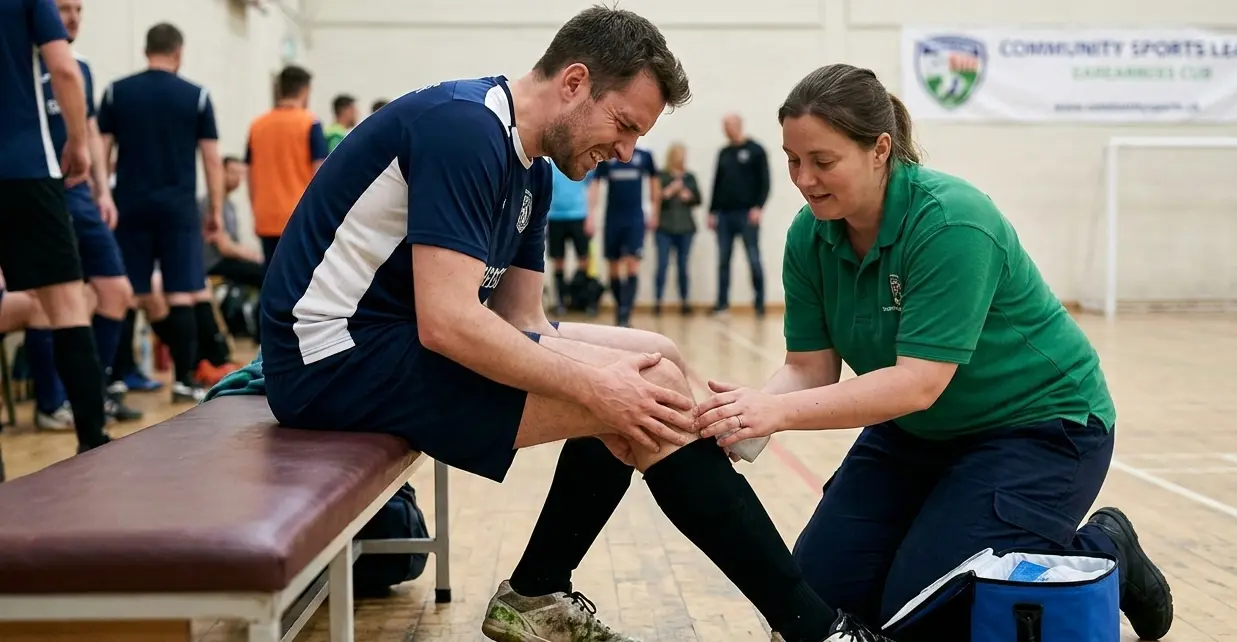
Hello, and welcome. If you are reading this, chances are you or someone you love is struggling with knee injuries. Perhaps it’s a sharp sting that caught you off guard during a football match at Sharjah Sports City, or maybe it’s a dull, persistent ache that makes climbing the stairs of your home feel like a mountain trek.
I want you to take a deep breath and know one thing: You are not alone, and you are in safe hands. In my practice here in Sharjah, I often tell my patients, “I don’t just treat knees; I treat people.” To me, you aren’t just a file number or an X-ray; you are a father who wants to play with his children, a grandmother who wants to walk comfortably to the local masjid, or a young athlete dreaming of the next big win. I treat every patient with the same care and dedication I would give my own family.
Understanding Your Knee: The Foundation of Your Movement
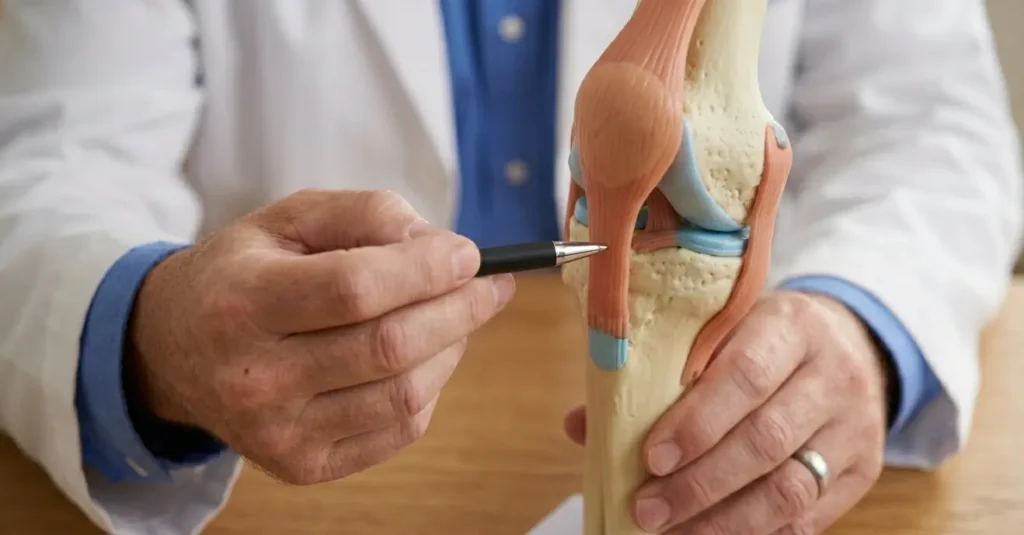
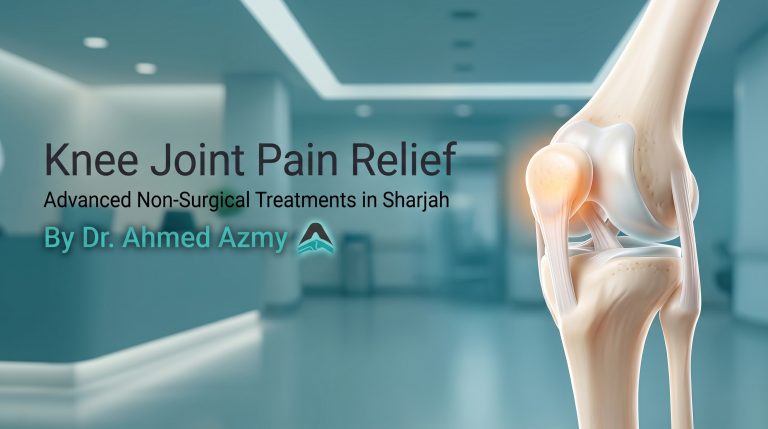
Before we talk about what goes wrong after knee injuries, it helps to understand how beautifully the knee is designed. Think of your knee as a well-coordinated team where every member has a vital role.
- The Bones: Three main bones meet here. your thighbone (femur), your shinbone (tibia), and your kneecap (patella).
- The Cartilage: This is the “cushion.” Articular cartilage allows the bones to glide smoothly, while the meniscus acts as a rubbery shock absorber between the femur and tibia.
- The Ligaments: These are the “strong ropes” that hold the bones together. You’ve likely heard of the ACL (in the front) and the PCL (in the back), which control back-and-forth motion, and the MCL and LCL on the sides, which keep the knee stable.
- The Tendons: These connect your muscles to the bones, acting like the cables that allow your muscles to move the joint.
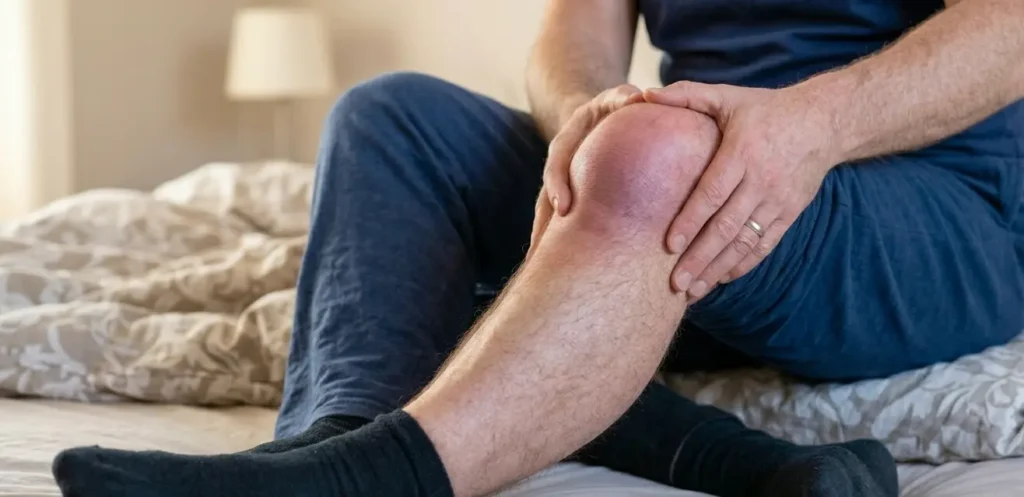
When any part of this “team” is injured, the whole system feels the strain, and unpleasant symptoms and signs begin to appear, such as pain, redness, and swelling.
Common Causes of Knee Injuries We See in Sharjah
Living in the UAE, our lifestyles are unique. From the high-impact sports enjoyed by our vibrant expat community to the repetitive strain of daily life in a bustling city, several common issues tend to crop up.
- Sudden knee Injuries (Acute Trauma): These usually happen in an instant. a sudden twist while playing padel, a fall on a slippery surface, or a collision during a weekend cricket match.
- ACL Tears: Very common in sports involving sudden stops or changes in direction. You might hear a “pop” followed by immediate swelling.
- Meniscus Tears: This often happens when you twist your knee while your foot is firmly planted.
- Fractures and Dislocations: These are serious injuries usually caused by high-impact force, such as a fall or a motoring accident.
- Overuse and Wear-and-Tear: Sometimes, the pain doesn’t come from a single event but builds up over time.
- Osteoarthritis: This is the most common form of arthritis, where the “cushioning” cartilage wears away over the years. It’s a “wear-and-tear” condition that I see often in our older family members.
- Tendonitis (Jumper’s Knee): This is an inflammation of the tendons, often seen in runners or those who do a lot of jumping.
- Bursitis: Small fluid-filled sacs (bursae) cushion the joint. If you spend a lot of time kneeling. perhaps during prayer or gardening. These can become inflamed and painful.
- Lifestyle Factors: Our local environment plays a role too. The heat in Sharjah often means we move from highly air-conditioned offices to the warm outdoors, which can sometimes make joint stiffness feel more pronounced. Additionally, carrying extra weight puts significant pressure on the knees. Every extra kilogram feels like four kilograms of pressure on your joints when you walk.
Symptoms of knee injuries: What Is Your Knee Telling You?
Your body has its own way of asking for help. While pain is the most obvious sign, keep an eye out for these red flags:
- The “Pop”: Hearing or feeling a pop during an injury often points to a ligament tear.
- Instability: The feeling that your knee is “giving way” or “buckling” when you try to stand or walk.
- Locking: If your knee gets stuck in one position and you can’t straighten it, this is often a sign of a meniscus tear.
- Swelling and Warmth: This indicates inflammation or internal bleeding within the joint.
- Stiffness: Especially in the morning or after sitting for a long time (common in osteoarthritis).
If you experience any of these symptoms, you must obtain an accurate medical diagnosis and begin a treatment plan immediately.
Book an appointment now and let’s not wait for any complications to arise.
My Approach: The Diagnosis Pathway
When you come to see me, my first goal is to listen. I want to hear the story of your pain. Was it a sudden injury? Does it hurt more in the morning? How is it affecting your ability to take care of your family?
- A Friendly Conversation: We start with your history. Your lifestyle and goals are just as important as the clinical symptoms.
- Physical Examination: I will gently check your knee for swelling, points of tenderness, and range of motion. We’ll look at how you walk and how the joint feels when moved.
- Advanced Imaging: To see what’s happening inside, we may use:
- X-rays: Great for looking at bones and checking for arthritis.
- MRI: This gives us a detailed “picture” of the soft tissues—the ligaments, tendons, and cartilage.
- Ultrasound: Useful for looking at tendons and bursitis in real-time.
Read also about knee ligament tear treatment and advanced treatment protocols.
Treatment Options for knee injuries
I believe in a “conservative-first” approach. Surgery is a wonderful tool, but it is not always the first or only answer. We explore all avenues to help you heal in the way that’s best for your specific life.
Conservative (Non-Surgical) Treatments
Many of my patients find relief and return to full health without ever entering an operating room.
- The R.I.C.E Protocol: Rest, Ice, Compression, and Elevation. This is your first line of defense after a minor injury.
- Physical Therapy: This is the cornerstone of recovery. We work with talented therapists to strengthen the muscles around the knee, taking the pressure off the joint itself.
- Medication: Simple anti-inflammatories can help manage pain and reduce swelling while you heal.
- Injections: Sometimes, a little extra help is needed. We offer localized injections (like hyaluronic acid or “joint grease”) to provide lubrication and reduce inflammation directly where it hurts.
Surgical Treatments
If the injury is severe, like a complete ACL tear or a complex fracture. Surgery may be the most compassionate choice to ensure you can walk without pain in the future.
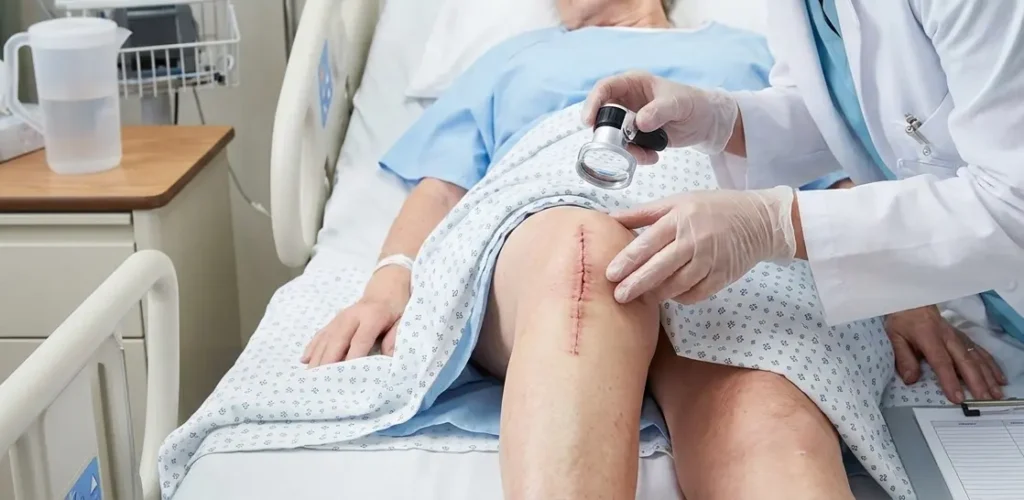
- Arthroscopy (Keyhole Surgery): Using tiny instruments and small incisions, I can “clean up” torn cartilage or repair ligaments. This means less pain and a faster return home to your family.
- Knee Replacement: For those with advanced arthritis, a partial or total knee replacement can truly be a “new lease on life,” allowing you to walk, travel, and play again.
Now you can visit my official website –Dr. Ahmed Azmy’s website– to see the latest review for my successfully treated clients.
Recovery and Prevention: Protecting Your Future
Healing is a journey, and I’ll be with you every step of the way. Recovery isn’t just about the surgery or the medicine; it’s about the work you do afterward.
- Listen to Your Body: Don’t rush back into heavy activity. If it hurts, stop.
- Weight Management: Maintaining a healthy weight is the kindest thing you can do for your knees.
- Strengthen the “Support Team”: Focus on your quadriceps and hamstrings. Strong legs mean happy knees.
- Proper Footwear: Especially in our UAE malls and paved walkways, supportive shoes are essential.
Frequently Asked Questions (From My Patients)
Dr. Ahmed, do I really need surgery for my torn meniscus?
Not always! Many meniscus tears, especially those caused by age (degenerative), respond beautifully to physical therapy and activity modification. We only consider surgery if the knee is “locking” or if conservative treatment hasn’t helped you get back to your daily life.
Is the Sharjah heat making my knee pain worse?
Extreme temperatures can sometimes affect joint fluid and inflammation. More importantly, we tend to be less active when it’s very hot outside, which can lead to stiffness. I recommend low-impact exercise in climate-controlled environments, like swimming or mall-walking.
How long will it take before I can walk normally again?
Every “family member” (patient) is different. A minor strain might take a few weeks, while a major surgery like a knee replacement or ACL repair involves a dedicated 6-to-12-month recovery journey. We will set realistic milestones together.
A Note from My Heart to Yours
Living with knee injuries pain can feel like a heavy burden, but please remember: pain is temporary, and hope is just around the corner. Whether you are a young athlete at the start of your journey or a patriarch of a large Sharjah family, your mobility matters to me.
If you’re struggling, if you’re worried, or if you just want to know what your options are, I am here. You don’t have to suffer in silence. Let’s get you back to the life you love.