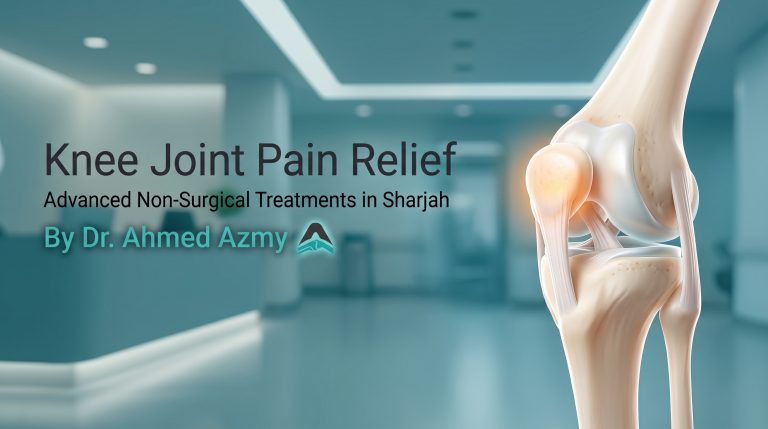
Back of Knee Pain Causes Warning Signs and Treatment
Back of knee pain can come from a Baker’s cyst, a muscle or tendon strain, a meniscus tear, a posterior cruciate ligament...
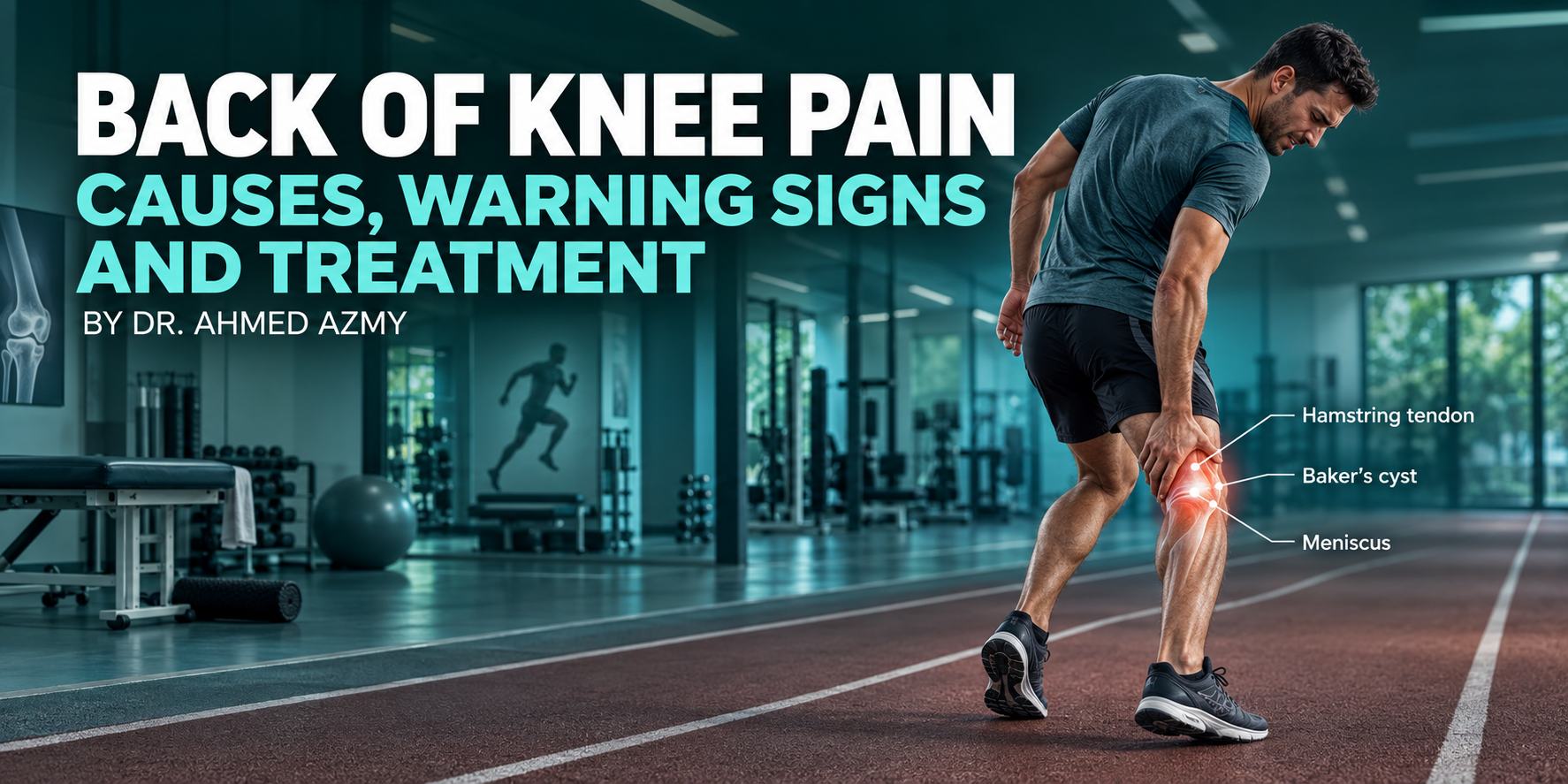
Back of knee pain can come from a Baker’s cyst, a muscle or tendon strain, a meniscus tear, a posterior cruciate ligament injury, arthritis or, less commonly, a blood clot or another vascular problem. The pattern of swelling, injury, movement restriction and calf symptoms matters more than the location alone. Sudden calf swelling, warmth or redness – especially with breathlessness or chest pain – requires urgent medical assessment.
Pain behind the knee is also called posterior knee pain. It may start after running, twisting, a direct impact or a sudden increase in training. In other people, it develops gradually with joint inflammation, arthritis or a fluid-filled swelling known as a Baker’s cyst. Because muscles, tendons, ligaments, cartilage, nerves and blood vessels all pass through or near this compact area, the same symptom can have very different causes.
This guide explains the most likely causes, the clues that help distinguish them, how an orthopedic assessment is performed and which treatments may be considered. It cannot diagnose an individual case, and emergency symptoms should never be managed through online advice alone.
What Does Back of Knee Pain Mean
Back of knee pain describes discomfort in the hollow behind the joint, sometimes extending into the lower thigh or upper calf. It may feel sharp during movement, tight after activity, aching at rest or associated with a visible lump. The pain location is useful, but diagnosis depends on the full pattern: how it began, whether the knee swelled, which movement reproduces it, and whether the leg has warmth, color change, numbness or weakness.
Pain after a sudden twist raises different possibilities from painless swelling that gradually becomes tight. Likewise, discomfort limited to running is assessed differently from sudden calf pain and swelling. Avoid assuming that every lump is a Baker’s cyst or that every exercise-related ache is a simple strain.
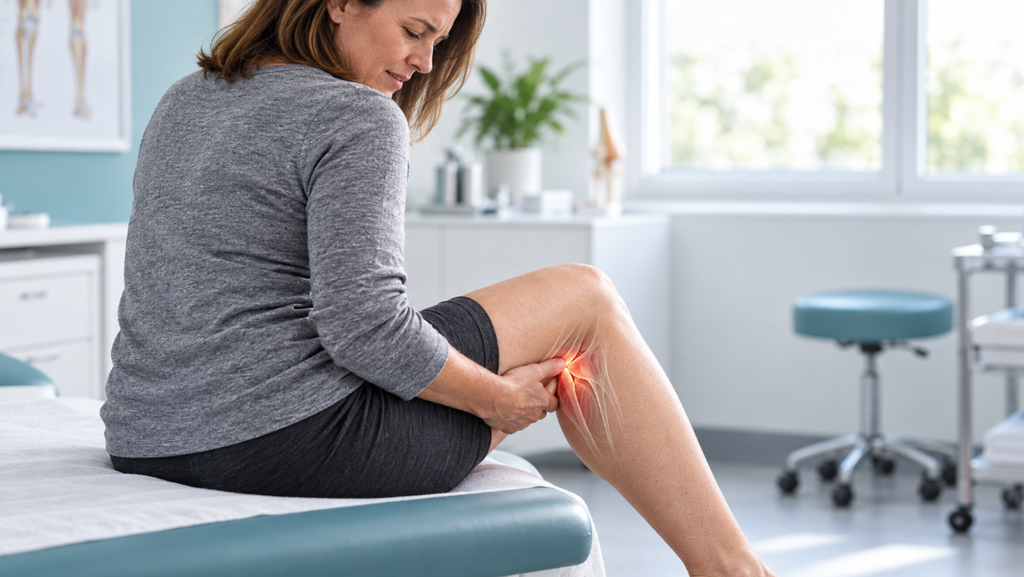
Back of Knee Pain Patterns and Possible Causes
The following patterns can guide the clinical conversation, but they are not a self-diagnosis tool.
| Pain or symptom pattern | Possible explanation | Clue that helps assessment |
|---|---|---|
| Soft lump or tightness behind the knee | Baker’s cyst | May feel more noticeable while standing and can limit bending |
| Pain after running or sprinting | Hamstring, calf or popliteus overload | Tenderness linked to training load and resisted movement |
| Pain after twisting with catching or locking | Meniscus injury | Joint-line tenderness, swelling or inability to fully straighten |
| Pain after a forceful impact or hyperextension | PCL or other ligament injury | Swelling, instability or difficulty bearing weight |
| Gradual ache with stiffness and recurrent swelling | Arthritis or cartilage degeneration | Often worse after load or after inactivity |
| Sudden calf swelling, warmth or redness | DVT or ruptured Baker’s cyst | Needs urgent assessment because symptoms can overlap |
Common Causes of Pain Behind the Knee
Baker’s Cyst
A Baker’s cyst, or popliteal cyst, is a collection of joint fluid that forms behind the knee. In adults, it often develops because another knee problem produces excess fluid, such as osteoarthritis, inflammatory arthritis or a meniscus injury. It may cause a soft lump, pressure, stiffness, clicking or difficulty bending the knee. Symptoms can become more noticeable after walking or prolonged standing.
A cyst may settle when the underlying knee condition is controlled. If it ruptures, fluid can track into the calf and cause sudden pain, swelling, warmth or skin color change. Those symptoms can resemble deep vein thrombosis, so the difference should be assessed clinically rather than guessed at home.
Hamstring Calf or Popliteus Strain
The hamstring tendons attach near the back of the knee, while the upper calf and small popliteus muscle help control knee movement. Sprinting, hills, cycling, repeated jumping or a rapid increase in training can overload these tissues. Pain is commonly linked to activity and may be reproduced by stretching or contracting the involved muscle. Bruising, a sudden snap, marked weakness or difficulty walking suggests a more significant injury.
Meniscus Tear
The menisci are cartilage structures that distribute load inside the knee. A tear can follow a twisting injury or develop gradually with age-related degeneration. Pain may be felt along the inner or outer joint line and can extend toward the back of the knee. Swelling, catching, locking and loss of full extension increase suspicion of a mechanical problem.
Learn how tear pattern and mechanical symptoms influence meniscus tear treatment.
Posterior Cruciate Ligament Injury
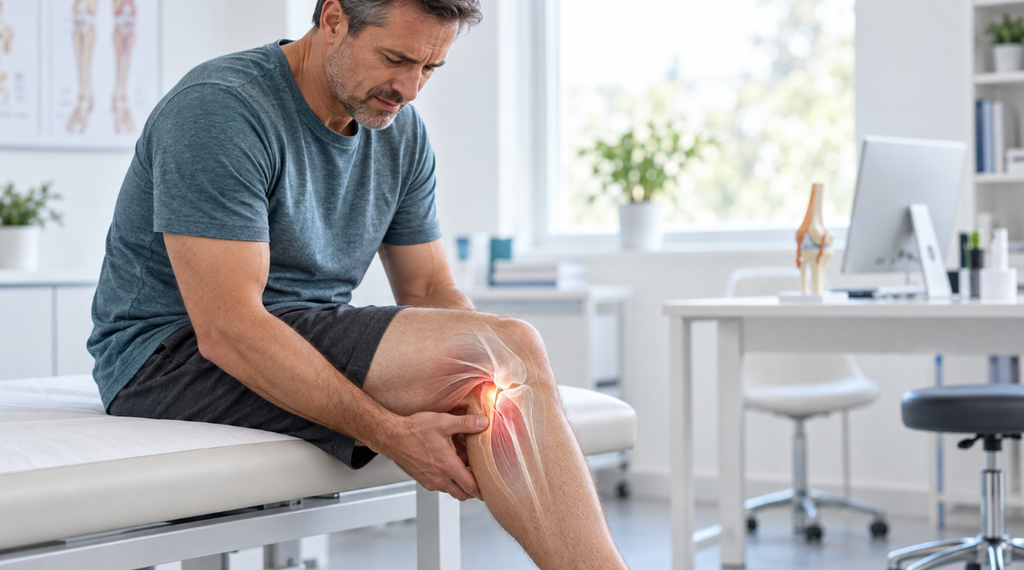
The posterior cruciate ligament, or PCL, limits backward movement of the shin bone. It may be injured by a force to the front of a bent knee, a fall onto the knee or a hyperextension event. Symptoms can include deep posterior discomfort, swelling and a sense that the knee is unstable. PCL injuries may occur with other ligament or cartilage damage, so examination of the whole knee is important.
For a broader overview of instability and ligament care, read knee ligament injury treatment.
Arthritis and Cartilage Changes
Osteoarthritis can produce stiffness, reduced movement, swelling and an ache that may be felt around or behind the knee. Symptoms often fluctuate with activity. Inflammatory arthritis and gout can also cause painful swelling, although a hot red joint with fever requires urgent evaluation for infection. Posterior pain in arthritis may also be related to an associated Baker’s cyst.
Persistent stiffness or recurrent swelling may also warrant information about knee cartilage damage and treatment.
Deep Vein Thrombosis and Other Vascular Causes
Deep vein thrombosis, or DVT, is a blood clot in a deep vein. It can cause one-sided calf or leg swelling, pain, warmth and color change, although symptoms vary. Risk can be higher after surgery, prolonged immobility or travel, during pregnancy, with estrogen-containing medication, active cancer or a previous clot. A ruptured Baker’s cyst can look similar, which is why urgent assessment and, when indicated, ultrasound are important.
Less common vascular causes include problems involving the popliteal artery. A pulsating lump, a cold or pale foot, severe sudden pain or altered sensation needs urgent medical assessment. Do not massage a swollen painful calf or begin strenuous stretching while a clot or vascular problem remains possible.
Why Does the Back of My Knee Hurt When Bending or Straightening
Pain during deep bending may reflect pressure from a Baker’s cyst, irritation within the joint, a meniscus problem or inflamed soft tissues. Pain at full straightening can occur with swelling, hamstring or calf tension, posterior joint irritation or a mechanical block. The movement alone does not identify the diagnosis, but it helps the clinician select examination tests and imaging.
If the knee physically locks, cannot fully straighten, repeatedly gives way or becomes rapidly swollen after an injury, arrange an orthopedic assessment. Forcing the joint through a blocked range may worsen pain and does not correct the cause.
Back of Knee Pain After Running or Exercise
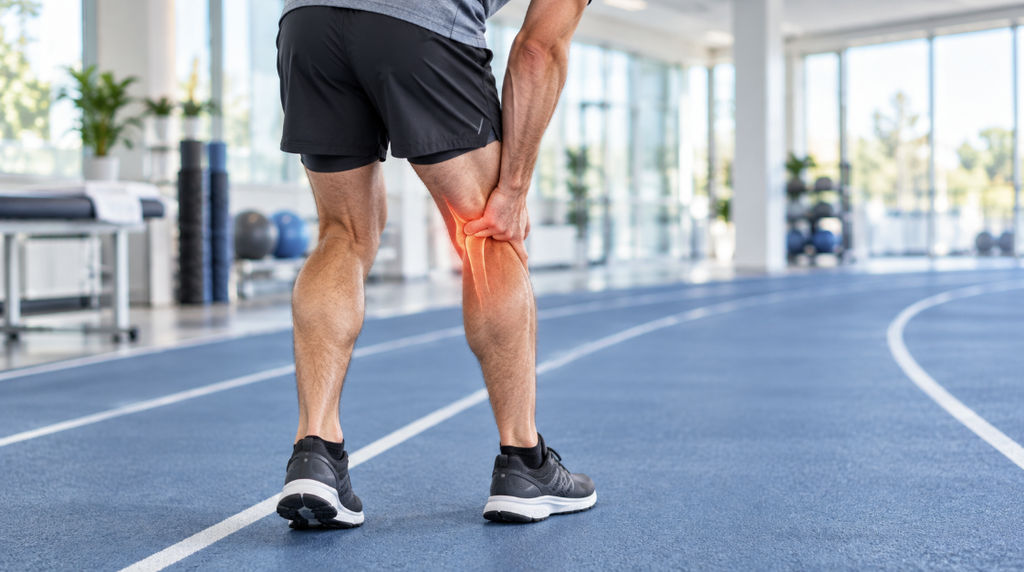
Exercise-related posterior pain is frequently associated with training load, speed work, hills, inadequate recovery or weakness around the hip and knee. A clinician may review recent mileage, changes in surface or footwear, warm-up habits and the exact point at which symptoms begin. Technique and strength matter, but there is no universal exercise that is safe for every cause of posterior knee pain.
Mild soreness that improves as activity is modified is different from sudden pain with a pop, bruising, swelling or loss of strength. Stop the provoking session when pain changes your gait or technique. Return to running should be based on comfortable walking, near-normal motion and progressive loading, not on a fixed number of days.
When Is Pain Behind the Knee an Emergency
Seek urgent medical care for sudden one-sided calf or leg swelling, warmth, redness or darkening of the skin, especially when there is no clear minor injury or when clot risk factors are present. Call emergency services immediately if leg symptoms occur with shortness of breath, chest pain, fainting or coughing blood, as these may indicate a pulmonary embolism.
Urgent assessment is also appropriate after a serious injury if the knee is visibly deformed, the foot becomes cold or numb, you cannot bear weight, or swelling develops rapidly. Fever with a hot, red and very painful knee can indicate infection and should not wait for a routine appointment.
How Back of Knee Pain Is Diagnosed
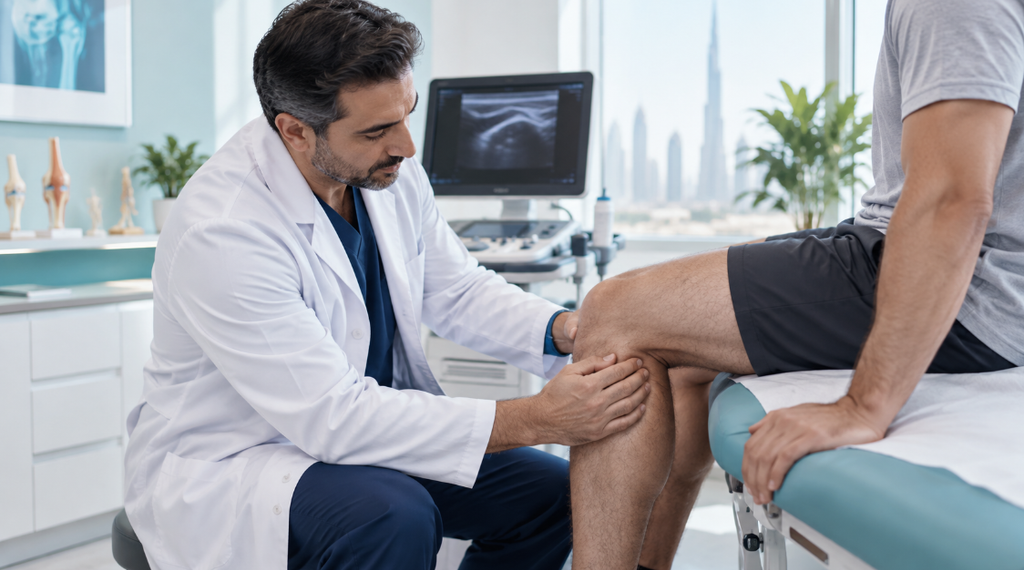
Diagnosis begins with a focused history. The clinician asks whether symptoms followed trauma or training, whether swelling appeared immediately or later, and whether there is locking, instability, fever, calf swelling or clot risk. Examination may assess gait, range of motion, joint-line tenderness, a posterior lump, muscle strength, ligament stability, circulation and nerve function.
Imaging is selected to answer a specific clinical question. Not every patient needs an MRI, and a normal X-ray does not exclude every tendon, ligament or meniscus problem.
| Investigation | What it can help assess | Common reason it may be selected |
|---|---|---|
| X-ray | Bones, alignment and arthritis | Trauma, persistent symptoms or suspected degenerative change |
| Ultrasound | Cyst, superficial soft tissue and blood flow | Posterior lump or concern about DVT |
| MRI | Menisci, ligaments, cartilage and deeper soft tissue | Mechanical symptoms, significant injury or unresolved diagnosis |
| Blood tests or joint fluid analysis | Inflammation, infection or crystals | Hot swollen joint, fever or suspected gout/inflammatory disease |
Treatment for Back of Knee Pain
Treatment should address the cause rather than the location alone. A muscle overload problem, a symptomatic cyst, a meniscus tear and a blood clot require different pathways. The plan also depends on symptom severity, activity goals, examination findings and relevant medical history.
Early Self Care for Mild Mechanical Pain
For mild pain after activity without red flags, short-term relative rest can reduce irritation. Temporarily avoid the movement that clearly reproduces pain, use a wrapped cold pack for short periods if swelling is present, and elevate the leg when comfortable. Gentle motion may help prevent stiffness, but sharp pain, locking or increasing swelling is a reason to stop and seek advice.
Pain medicines are not suitable for everyone. Anti-inflammatory medicines may interact with anticoagulants or be unsuitable with kidney disease, stomach ulcers, certain heart conditions or pregnancy. Ask a clinician or pharmacist if you are unsure, and do not use medication to push through an undiagnosed injury.
Physical Therapy and Progressive Loading
Rehabilitation may include restoring knee movement, strengthening the quadriceps, hamstrings, calf and hip muscles, and gradually rebuilding balance and sport-specific capacity. The exercise choice changes with the diagnosis. Early PCL rehabilitation, for example, is not identical to care for a hamstring strain or arthritis. A structured plan also reduces the chance of returning to sport before the knee can tolerate the required load.
Injections Drainage and Surgery
A symptomatic Baker’s cyst may improve when the underlying joint inflammation or injury is treated. Aspiration or an injection may be considered in selected cases, but recurrence is possible if the source of excess fluid remains. Surgery is not the default treatment for posterior knee pain. It may be discussed for repairable structural injuries, persistent mechanical locking, significant instability or other problems that have not responded to appropriate non-surgical care.
When a structural problem requires a minimally invasive procedure, the relevant pathway may include knee arthroscopy.
How Long Does Recovery Take
Recovery time depends on the diagnosis and severity. Mild muscle overload can improve over days to several weeks, while a significant tendon, ligament or meniscus injury may require a longer rehabilitation period. Arthritis and recurrent cysts are often managed as ongoing conditions rather than with a single recovery deadline. Surgery adds procedure-specific healing and rehabilitation stages.
A safer return to activity is based on function: swelling is controlled, walking is comfortable, motion is close to the other knee, and strength and balance meet the demands of the activity. Returning only because pain has briefly settled can lead to recurrence if capacity has not been rebuilt.
Can Back of Knee Pain Be Prevented
- Increase running distance, speed and resistance gradually instead of changing several training variables at once.
- Build strength in the hips, thighs and calves and allow recovery between demanding sessions.
- Warm up for the activity and practise the movement pattern needed for the sport or job.
- Use suitable footwear and change training surfaces progressively.
- Do not ignore recurrent swelling, locking, instability or a lump behind the knee.
Prevention cannot eliminate arthritis, every accident or every clot risk. Its purpose is to improve tissue capacity and identify recurring problems before they become more limiting.
When to Book an Orthopedic Assessment in Sharjah
Arrange an assessment when pain persists, returns with activity, restricts bending or straightening, causes swelling, or follows a twist or impact. Early evaluation is particularly useful when the knee locks, gives way, or prevents normal walking. A focused examination can determine whether the problem is more likely to involve the joint, cartilage, ligament, tendon, muscle or a posterior cyst.
Explore knee treatments and arthroscopy with Dr. Ahmed Azmy or book an assessment if symptoms are limiting your mobility.
Ready for a clear diagnosis and a treatment plan matched to your activity goals? Contact Dr. Ahmed Azmy’s clinic in Sharjah to arrange an orthopedic consultation.
Conclusion
Back of knee pain is a symptom with several possible sources. A Baker’s cyst, muscle or tendon overload, meniscus injury, PCL injury and arthritis are common orthopedic considerations, while sudden calf swelling and vascular symptoms require urgent exclusion of DVT or another circulation problem. The safest treatment starts with identifying the cause through history, examination and selective testing rather than relying on the pain location alone.
Medical disclaimer: This article provides general educational information and does not replace professional medical advice, diagnosis or treatment. Seek urgent care for emergency symptoms and consult a qualified clinician before starting medication, exercises or a new treatment plan.
Last updated: September 9, 2026
Frequently Asked Questions
What is the most common cause of pain behind the knee
There is no single cause for every patient. Common possibilities include a Baker’s cyst, muscle or tendon overload, meniscus injury and arthritis. The most likely diagnosis depends on swelling, trauma, activity, locking, instability and calf symptoms.
Can a Baker’s cyst cause back of knee pain
Yes. A Baker’s cyst can cause a soft lump, tightness, aching and difficulty bending the knee. In adults it is often associated with an underlying joint condition such as arthritis or a meniscus injury.
How do I know if pain behind my knee is a blood clot
Symptoms such as one-sided calf or leg swelling, warmth, redness or color change can occur with DVT, but symptoms alone cannot confirm or exclude a clot. Urgent clinical assessment and sometimes ultrasound are needed, especially when risk factors are present.
Why does the back of my knee hurt when I bend it
Deep bending can increase pressure from a Baker’s cyst or irritate a meniscus, joint inflammation or nearby soft tissues. Examination is needed when the pain persists, swelling recurs or movement becomes restricted.
Why does the back of my knee hurt after running
Training overload can irritate the hamstring, upper calf or popliteus tissues, but running may also expose an underlying joint problem. Recent changes in distance, speed, hills, footwear and recovery help guide the assessment.
Should I massage pain behind the knee
Avoid deep massage when there is unexplained calf swelling, warmth, redness, a new lump or concern about a blood clot or vascular problem. For a confirmed muscle problem, a clinician or physiotherapist can advise when soft-tissue treatment is appropriate.
Do I need an MRI for posterior knee pain
Not always. X-rays may be useful for bone or arthritis, while ultrasound can evaluate a cyst or blood flow. MRI is usually selected when meniscus, ligament, cartilage or deeper soft-tissue injury is suspected and the result may change management.
Which doctor should I see for persistent back of knee pain
An orthopedic or sports injury specialist can assess persistent movement-related pain, locking, swelling or instability. Sudden calf swelling, circulation changes, chest pain or breathlessness require urgent or emergency medical care instead of a routine orthopedic appointment.