Assess your pain
Dr. Ahmed Azmy

Robotic Knee Replacement: Precision, Benefit & Recovery Time

← Back to All Blogs
Robotic Knee Replacement

Knee pain can feel like an invisible weight, slowing down your life and making even a simple walk through Al Majaz Waterfront feel like a daunting task. For many in Sharjah and the wider UAE, traditional treatments sometimes fall short of restoring that effortless, natural glide in the step. This is where robotic knee replacement enters the frame, a revolutionary advancement in orthopedic science that is transforming how we approach joint health.

If you are struggling with chronic knee stiffness or debilitating arthritis, you aren’t just looking for surgery; you are looking for a return to your active lifestyle. Robotic-assisted technology offers a level of precision that was once thought impossible, tailoring the procedure to your unique anatomy. In this comprehensive guide, we will explore everything you need to know about this procedure and how it can help you reclaim your mobility.

What is Robotic Knee Replacement Surgery?

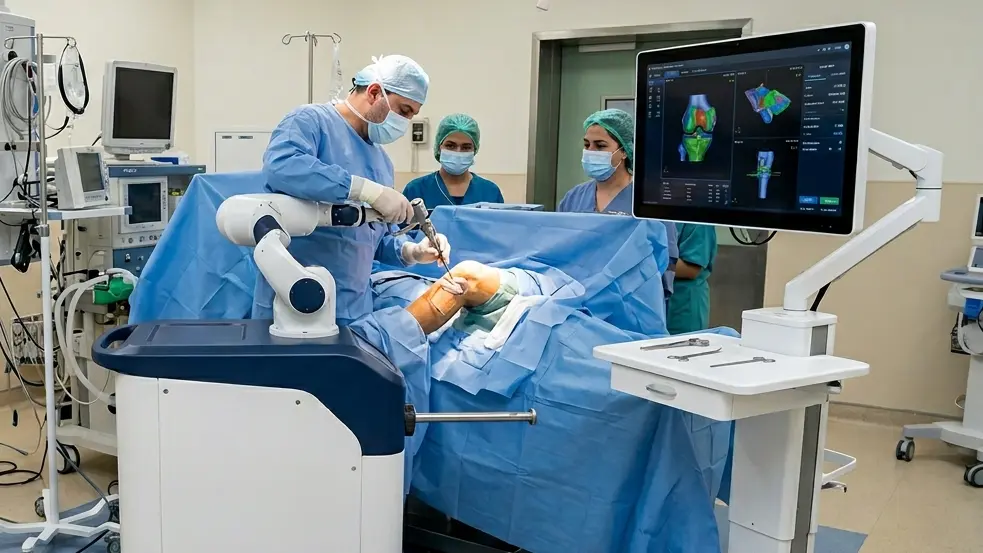
Contrary to what the name might suggest, a robot does not perform the surgery. Instead, robotic assisted knee replacement is a collaborative process where your surgeon uses a highly sophisticated robotic arm and specialized software to enhance the accuracy of the procedure.

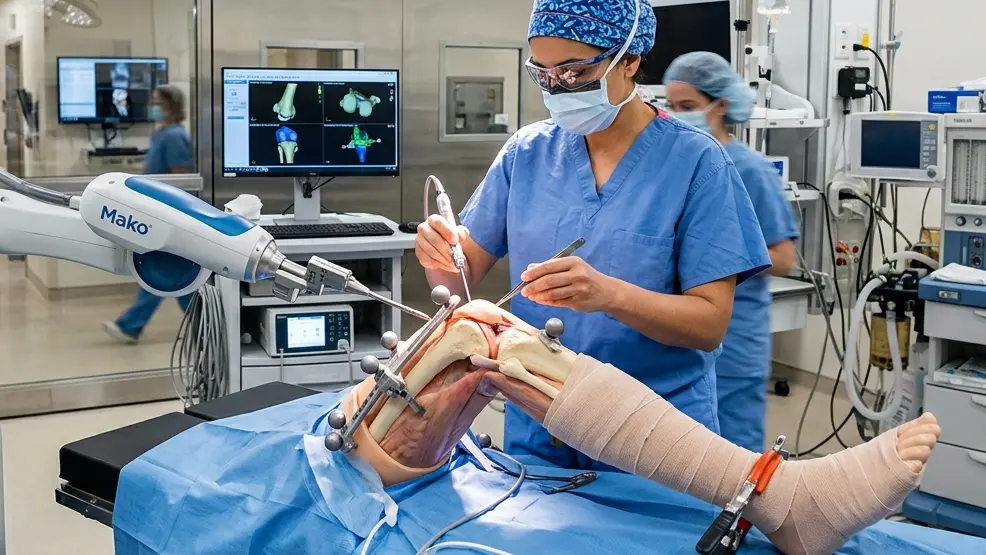
Think of it as a GPS for your knee. Before the first incision is made, the system creates a 3D digital model of your joint based on CT scans or intraoperative mapping. This allows the surgeon to plan the bone cuts and implant positioning with sub-millimeter precision. During the robotic knee replacement surgery, the robot provides real-time data and haptic feedback, ensuring the surgeon stays within the “safety zone” and preserves as much healthy bone and ligament as possible.

What is Robotic Knee Replacement Surgery

Types of Robotic Knee Replacement Surgeries

Depending on the extent of your joint damage, there are two primary types of robotic interventions:

  • Robotic Total Knee Replacement (TKR): This is for patients with extensive damage across multiple compartments of the knee. The robot helps resurface the entire joint, ensuring the artificial components are perfectly aligned with the patient’s mechanical axis.
  • Robotic Partial Knee Replacement (PKR): Often referred to as unicompartmental knee replacement, this is ideal for patients whose arthritis is limited to just one area. The robotic system is exceptionally useful here, as it allows for incredibly precise bone removal, leaving the healthy parts of your knee untouched.

Robotic Knee Replacement vs Traditional: What Makes it Different?

When comparing robotic knee replacement vs traditional methods, the difference lies in the “customization” factor.

  1. Precision in Alignment: In traditional surgery, surgeons use manual instruments and visual cues to align the implant. While highly effective, there is a margin for human error. The robotic system uses 3D mapping to ensure the implant fits your specific bone structure perfectly.
  2. Soft Tissue Balance: A successful knee replacement depends on the tension of the surrounding ligaments. Robotic software allows the surgeon to “balance” the knee digitally before any bone is cut, leading to a joint that feels more natural and stable.
  3. Bone Preservation: Because the robotic arm is constrained by a digital boundary, it prevents the accidental removal of healthy bone or damage to surrounding soft tissues.
Robotic Knee Replacement vs Traditional

Advantages and Disadvantages of Robotic Knee Replacement Surgery

The advantages of robotic-assisted knee replacement surgery:

  • Enhanced Accuracy: Higher likelihood of the implant being placed in the optimal position.
  • Smaller Incisions: Often leads to less scarring and reduced trauma to the quadriceps muscle.
  • Reduced Pain: Patients frequently report less post-operative pain due to the minimally invasive nature of the robotic assistance.
  • Long-term Longevity: A perfectly aligned knee wears down more slowly, potentially extending the life of the prosthetic.

The disadvantages of robotic-assisted knee replacement surgery:

  • Learning Curve: The technology is only as good as the surgeon. It requires specialized training to master the software and robotic arm.
  • Initial Cost: The equipment is expensive, which can sometimes be reflected in the total surgical fees.
  • Surgery Time: In some cases, the setup for the robotic system may slightly increase the time spent in the operating room.

When Robotic Knee Joint Replacement is Indicated

This surgery isn’t for everyone who has a “clicky” knee. It is typically recommended for patients in Sharjah who have:

  • Advanced Osteoarthritis: When non-surgical treatments like physiotherapy, injections, or weight loss no longer provide relief.
  • Complex Deformities: Patients with significant bowing or “knock-knees” benefit greatly from the digital planning of the robot.
  • Post-Traumatic Arthritis: If a previous injury has led to severe joint degeneration.
  • High Functional Demands: Younger, active patients who want a joint that feels as “natural” as possible to return to sports or trekking.
Robotic Knee Joint Replacement indication

How Much Does Robotic Knee Replacement Cost?

The robotic knee replacement cost in the UAE, specifically in regions like Sharjah and Dubai, can vary based on several factors. On average, you can expect the cost to range between AED 45,000 to AED 85,000 per knee.

Factors influencing the price include:

  • The type of robotic platform used (e.g., Mako, Rosa, or NAVIO).
  • The complexity of the case (Total vs. Partial).
  • The length of the hospital stay.
  • The specific brand of the implant used.

Many private insurance providers in the UAE now cover robotic-assisted procedures, but it is always essential to verify your “pre-authorization” status before proceeding.

Explore the expert knee treatments & arthroscopy by Dr. Ahmed Azmy

What is the Success Rate of Robotic Knee Replacement Surgery?

Data suggests that the success rate of robotic knee replacement is exceptionally high, often exceeding 95% in terms of patient satisfaction and implant stability. Because the robot ensures the most accurate alignment possible, “revision” surgeries (fixing a failed knee replacement) are becoming less common. Patients report higher “forgotten joint” scores, meaning they eventually reach a point where they don’t even notice they have an artificial knee.

What is the Recovery Time for Robotic Knee Replacement Surgery?

One of the most frequent questions we hear is regarding the robotic knee replacement recovery time. While every body heals differently, the timeline generally looks like this:

  • Days 1-2: Most patients are up and walking with a frame or crutches within hours of the surgery.
  • Weeks 1-3: You will focus on physical therapy to regain range of motion. Most patients can manage daily tasks at home independently.
  • Weeks 4-6: Many patients return to driving and light office work.
  • Months 3-6: Full recovery where you can engage in low-impact sports, swimming, and long walks.

Because the robotic method is less invasive for soft tissues, the early phase of recovery (the first 2-3 weeks) is often smoother and less painful than traditional methods.

Recovery Time for Robotic Knee Replacement Surgery

Problems with Robotic Knee Surgery

While rare, problems with robotic knee surgery can occur. These include:

  • Mechanical Failure: Like any computer system, glitches can happen, requiring the surgeon to pivot to traditional methods mid-surgery.
  • Pin-site Issues: The robot requires small pins to be placed in the bone to track movement; these sites can occasionally become irritated or infected.
  • Over-reliance: Technology should never replace clinical judgment. It is vital to choose a surgeon who uses the robot as a tool, not a crutch.

Why Choose Dr. Ahmed Azmy for Your Knee Surgery?

Selecting the right surgeon is the most critical decision in your healing journey. Dr. Ahmed Azmy stands out as a leading destination for orthopedic care in the UAE for several reasons:

  1. Expertise and Precision: With a deep specialization in advanced joint reconstruction, Dr. Ahmed Azmy combines clinical wisdom with the latest robotic technologies to ensure every patient receives a “tailor-made” knee.
  2. Patient-Centered Care: We understand that surgery is a big step. Dr. Ahmed Azmy prioritizes clear communication, ensuring you understand every phase of the procedure and recovery.
  3. Holistic Recovery: Beyond the operating room, our team provides comprehensive post-operative support and physiotherapy coordination to ensure you hit your recovery milestones.
  4. Localized Excellence: Based conveniently for residents of Sharjah and Dubai, we offer world-class surgical standards without the need for international travel.

If you are tired of living with pain and want to explore if robotic technology is right for you, now is the time to take action.

Contact Dr. Ahmed Azmy Today for a Comprehensive Knee Consultation

FAQs About Robotic Knee Replacement Surgery

Is robotic surgery good for knee replacement?

Yes, it is highly effective. It offers superior precision in implant positioning and better soft tissue balancing, which can lead to a more natural-feeling joint and potentially longer-lasting results compared to traditional manual methods.

Most patients can return to light daily activities within 3 to 6 weeks. However, complete healing and a return to more strenuous physical activities typically take 3 to 6 months of consistent physical therapy.

While no major surgery is completely painless, robotic-assisted surgery is associated with less post-operative pain. This is because the precision of the robotic arm allows for smaller incisions and less trauma to the surrounding muscles and ligaments.

No. Your surgeon is in full control the entire time. The robotic arm simply acts as a precision guide to ensure the surgeon’s plan is executed perfectly, preventing any deviations from the digital 3D model.

Conclusion

The journey to ending chronic knee pain is no longer a path of uncertainty. Through robotic knee replacement, residents of Sharjah and the UAE have access to a future where surgery is more precise, recovery is more manageable, and the results are more durable. By choosing a specialist like Dr. Ahmed Azmy, you are choosing a partner dedicated to restoring your quality of life using the highest standards of medical technology.

Don’t let knee pain dictate your future. Reclaim your stride and return to the activities you love with the confidence that only expert, robotic-assisted care can provide. Reach out to Dr. Ahmed Azmy today and take the first step toward a more mobile tomorrow.

Book an Appointment with Dr. Ahmad Azmy

Contact Form dr
Dr. Ahmed Azmy Orthopedic & Sports Injuries logo.

Redefining Orthopedic Excellence in the UAE. Dr. Ahmed Azmy known as The Best Ortho Surgeon in Sharjah offers world-class, compassionate, and personalized treatments for sports injuries and advanced joint reconstruction.

Contact Us

Powered By ICONCLY Medical © 2026 . All rights reserved.

Patient Connection Hub