
Preserve Your Joints: Orthopedic Stem Cell Therapy in Sharjah
Surgeon-led advice on cell-based care for chronic joint pain. Explore your options, understand the evidence and find out whether a joint-preservation approach is appropriate for you.
Serving patients in Sharjah, Ajman and the wider UAE.

Orthopedic expertise
Patients treated
Precise placement
An evidence-informed discussion
What Is Orthopedic Stem Cell Therapy?
Orthopedic stem cell therapy refers to a group of cell-based injections being studied for worn or damaged joints. An autologous approach uses cells from your own tissue. A sample of bone marrow or fat tissue may be collected and processed before an image-guided injection, depending on the specific protocol.
Then choose the treatment.
How might cell-based care help?
These preparations contain a mixture of cells and biological signals. Researchers are studying how they may influence inflammation and the joint environment. Research is still evolving, and results vary from patient to patient.
The joint
Worn cartilage and an irritated joint lining
The preparation
Your own tissue, processed under a specific protocol
The proposed response
Biological signals rather than guaranteed new cartilage
Calm inflammation
Cell-related signals are being studied for their potential to influence inflammation, a driver of joint pain and stiffness.
Support repair signals
The proposed effect is biological signalling. An injection is not a replacement for damaged cartilage.
Protect remaining cartilage?
Whether cell-based injections protect cartilage or change the course of arthritis remains uncertain.
Want to understand a platelet-based option? Explore orthopedic PRP therapy.
Stem Cell Therapy for Joint Pain in Sharjah: Conditions We Assess
Your symptoms, imaging and previous treatment guide the conversation. Evidence for cell-based care differs between conditions and preparations.

Knee Osteoarthritis & Cartilage Wear
Persistent pain, swelling and stiffness from mild-to-moderate cartilage wear may lead to a discussion of cell-based options after established treatments have been reviewed.

Hip Joint Wear & Labral/Cartilage Damage
For patients with early-to-moderate hip wear who want to stay active, the assessment considers joint preservation, rehabilitation and other treatment options. Evidence for cell-based hip treatment is limited.

Shoulder Arthritis & Selected Rotator Cuff Problems
Joint wear and selected degenerative or partial rotator cuff problems need a precise diagnosis. A rehabilitation plan and established treatments are considered alongside the evidence for any proposed biologic procedure.
Chronic Tendon & Ligament Injuries
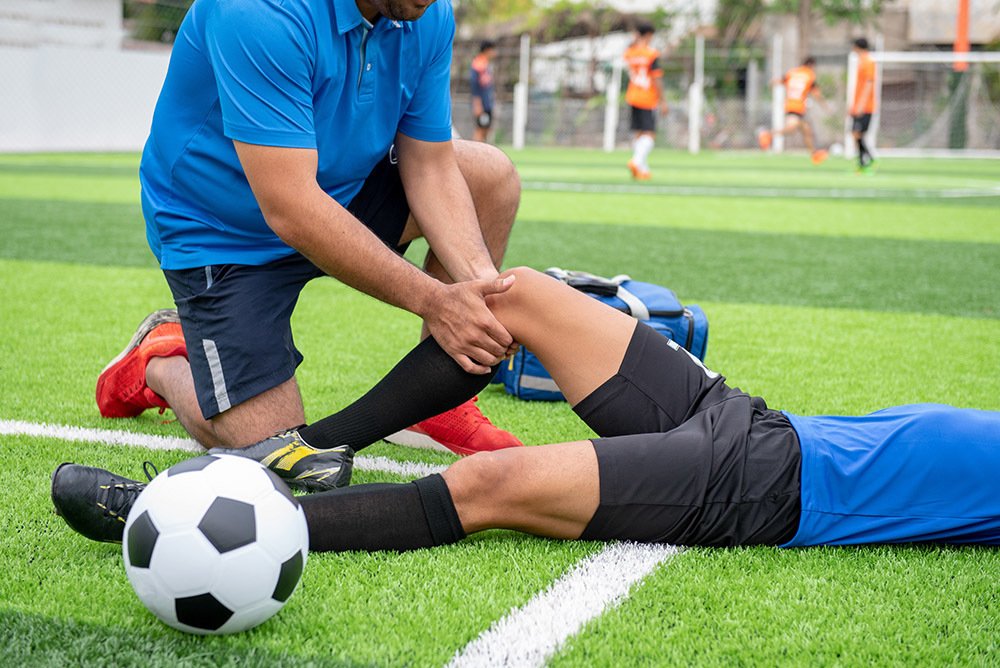
Long-standing tendon or ligament symptoms that have not settled with rest, physiotherapy or conventional care deserve reassessment. Evidence for cell-based treatment varies with the injury and preparation.
The Orthopedic Stem Cell Procedure, Step by Step
If an autologous procedure is appropriate and available under the applicable protocol, it may follow these stages. The exact plan and consent are agreed before treatment.

Your diagnosis guides every stage.
- Step 01
Orthopedic & Imaging Assessment
Dr. Azmy examines your joint, reviews your history and studies your MRI or X-rays to assess suitability. If another option is more appropriate, he will explain why.
- Step 02
Small Cell Sample
If an autologous procedure is agreed, a small sample of bone marrow or fat tissue may be collected with local anesthesia. The source, collection method and expected discomfort are explained beforehand.
- Step 03
Sterile Concentrating
The sample is processed in a sterile setting according to the selected protocol. The preparation method and what the product contains should be clear before treatment.
- Step 04
Image-Guided Joint Injection
Real-time ultrasound or other appropriate imaging helps guide the preparation into the intended target. The exact method depends on the joint and treatment protocol.
- Procedure time
- A same-day visit may take around 60–90 minutes. Your actual timing is confirmed for the protocol chosen.
- Comfort
- Local anesthesia may be used. Soreness at the sample and injection sites can last for a few days.
- First 48 hours
- Protect the joint and follow your individual advice on rest, medication and activity.
Recovery & Rehabilitation After Joint Stem Cell Therapy
Your joint needs time and the right kind of movement. The stages below are an illustrative guide; your treating team sets a plan for the actual procedure, joint and symptoms.
Days 0–2 Protect
Expect some soreness at the sample and injection sites. Rest the joint, avoid heavy loading and follow the medication advice you are given.
Weeks 1–2 Gentle movement
As soreness settles, light walking and gentle range-of-motion exercises may be introduced. Avoid impact sport until you are cleared.
Weeks 2–6 Rebuild
Guided physiotherapy works on strength, movement confidence and joint control. Progress is tailored to your symptoms and the treatment protocol.
Months 2–6 Return to activity
Improvement, if it occurs, is gradual. Return to demanding work or sport only after your treating team confirms that you are ready.
Progress is based on your recovery, not the calendar alone. Report symptoms that worsen instead of advancing activity on your own.
Do: support your recovery
- Keep the area clean and dry as instructed.
- Move gently within the limits set by your treating team.
- Attend follow-up and physiotherapy appointments.
- Stay hydrated and maintain a balanced diet.
Avoid: progressing too quickly
- Running, jumping or heavy lifting before you are cleared.
- Starting or stopping anti-inflammatory medicines or other prescribed medication without checking your plan with Dr. Azmy.
- Soaking the sample site in baths or pools before it is cleared.
- Pushing through sharp or increasing pain.
Your rehabilitation plan
Your plan is tailored to your joint and your goals, usually moving through four functional stages.
- Stage 01
Range of motion
Restoring comfortable movement.
- Stage 02
Strengthening
Building the muscles that support the joint.
- Stage 03
Balance & control
Improving stability and joint mechanics.
- Stage 04
Return to activity
Work-specific or sport-specific conditioning.
Follow-up with Dr. Azmy
Planned reviews may be around 2 weeks, 6 weeks, 3 months and 6 months. Your actual schedule and any repeat imaging are confirmed individually. Understand ongoing joint pain.
Orthopedic Stem Cell Therapy vs. PRP vs. Joint Replacement
The right treatment depends on the diagnosis, severity of joint damage and your priorities. This guide compares the approaches without assuming that one is automatically right for every patient.
| Clinical criterion | Orthopedic Stem Cell Therapy | Orthopedic PRP Therapy | Joint Replacement Surgery |
|---|---|---|---|
| Best for | Individual assessment after established options have been reviewed; suitability and evidence depend on the condition and cell preparation. | Selected early joint wear and tendon problems, after a clinical assessment. | Advanced arthritis with severe pain and loss of function when appropriate non-surgical options have not helped. |
| What it uses | A preparation from your own bone marrow or fat tissue, depending on the agreed protocol. | Platelets concentrated from a sample of your own blood. | A prosthetic implant replacing damaged joint surfaces. |
| How it is done | A tissue sample is collected, processed and injected under imaging guidance. This includes an invasive collection procedure. | Blood is drawn, processed and injected into the joint or tendon, often under imaging guidance. | Damaged surfaces are removed and an implant is fitted during an operation. |
| Main goal | Possible symptom relief. Reliable cartilage regeneration or delay of surgery has not been established. | May ease pain and support the management of selected joint or tendon symptoms. | Relieve pain and restore function by replacing the damaged joint surface. |
| Anesthesia & setting | Often local anesthesia and outpatient care, depending on the protocol. | Usually outpatient care, with local anesthesia where appropriate. | Spinal or general anesthesia, with hospital-based care. |
| Procedure time | Around 60–90 minutes for a same-day protocol; the treating team confirms the actual schedule. | Usually shorter than a cell-harvest procedure. | The operation and hospital stay vary by joint, technique and patient. |
| Recovery & downtime | Soreness can occur at the collection and injection sites. Activity is advanced under individual guidance. | Temporary soreness is common; activity advice is tailored to the treated area. | A longer recovery, usually with progressive mobility work over weeks to months. |
| Rehabilitation | A guided plan to rebuild strength, movement and joint control. | Exercises or physiotherapy as advised. | Structured rehabilitation is an essential part of recovery. |
A general comparison to support your discussion with an orthopedic specialist.
Best for
What it uses
How it is done
Main goal
Anesthesia & setting
Procedure time
Recovery & downtime
Rehabilitation
These options are not a mandatory treatment ladder. Examination, imaging and an informed discussion guide the choice.
Learn about orthopedic PRP therapyWho Is a Good Candidate for Orthopedic Stem Cell Therapy?
Not everyone is a candidate. A discussion about cell-based care makes sense only when your diagnosis, general health, the evidence and the exact protocol have all been considered.
It may be worth a discussion if:
- You have mild-to-moderate joint wear confirmed on imaging.
- Your pain persists despite appropriate physiotherapy, medication or other care.
- You want to discuss joint-preservation options and understand their limitations.
- Your general health and willingness to follow rehabilitation support a treatment plan.
You may need a different approach if:
- Imaging shows advanced bone-on-bone arthritis or severe deformity. Surgery may be the more appropriate option.
- You have an active infection, a bleeding disorder or another condition requiring further review.
- The source of pain may be outside the joint, for example in the spine.
Still unsure? Take two minutes to Assess Your Pain and let us help you find the right next step.
Book a ConsultationRisks & Realistic Outcomes of Orthopedic Stem Cell Therapy
Every invasive procedure has potential risks and limitations. Discuss the actual cell preparation, the collection method, regulatory status and established alternatives before deciding.
Possible effects and risks
- Soreness, swelling or bruising
- These can occur at the sample site and in the injected joint and are often short-lived.
- Temporary stiffness or a pain flare
- Symptoms may increase temporarily as the area settles. Follow the aftercare advice provided.
- Infection
- An invasive collection or injection carries an infection risk, even with sterile technique.
- Bleeding or nerve irritation
- The harvest site and injection area can be affected. Medical history and medication review help identify individual risks.
- Limited or no improvement
- Not every patient responds. A procedure may provide no meaningful benefit, and effects may not last.
What can you realistically expect?
Some patients report less pain and better movement over weeks to months. The response is variable. Treatment does not guarantee cartilage regrowth, slower degeneration, a permanent result or avoidance of surgery.
What influences your result?
- The degree and pattern of cartilage damage on imaging.
- Your age, weight and general health.
- The joint treated, its alignment and any instability.
- Your rehabilitation and follow-up plan.
Candidate screening
Your examination, imaging and medical history.
A defined protocol
Clear information on the source and processing of your own tissue.
Image-guided placement
Guidance appropriate to the joint and planned procedure.
An honest recommendation
Including established treatment or surgery when it is the better choice.
Why Trust Dr. Ahmed Azmy for Orthopedic Stem Cell Therapy in Sharjah?
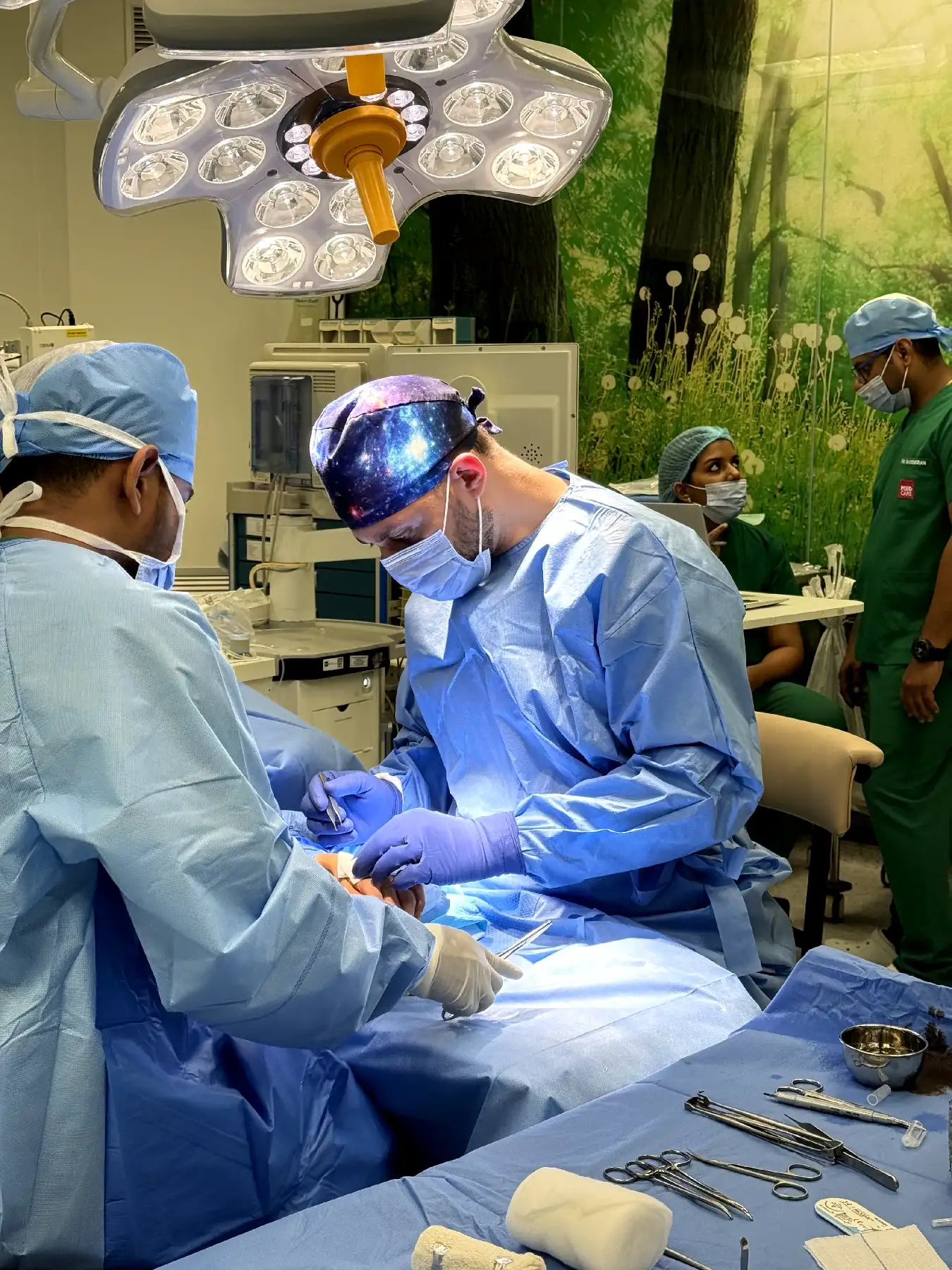
Regenerative care starts with the diagnosis and the precision behind it. Your assessment is led by an orthopedic surgeon, for patients in Sharjah, Ajman and the wider UAE.
Surgeon-level diagnosis
With 16+ years of orthopedic experience and 4,000+ surgeries, Dr. Azmy considers your imaging, the condition of the joint and when preservation or surgery makes more sense.
Joint mechanics, not just an injection
Alignment, ligaments and the way the joint carries load all matter. Your assessment considers the full picture.
Imaging-guided placement
Appropriate imaging helps guide treatment into the intended target.
Honest recommendations
Dr. Azmy offers both non-surgical and surgical care and explains which option is appropriate for your diagnosis.
Experience with 60,000+ consultations
You are treated as family, with time for questions and clear explanations at every step.
Orthopedic Stem Cell Therapy FAQs in Sharjah
Understand the preparation, the evidence, the recovery and the questions to ask before you decide.
Speak with our teamIs orthopedic stem cell therapy approved and safe in the UAE?
Approval is specific to the cell product, processing method, intended use, clinician and facility. There is no single approval covering every treatment described as stem cell therapy. Ask which health authority oversees the proposed procedure, whether the exact protocol is permitted or investigational, and what risks apply. Using your own cells does not remove the need for regulatory oversight or informed consent.
What is the difference between orthopedic stem cell therapy and PRP therapy?
PRP uses platelets concentrated from your own blood. Cell-based approaches may use a preparation from bone marrow or fat tissue and include an additional tissue-collection procedure. They are different treatments, with different evidence, risks and processing requirements. The choice is based on your diagnosis and the exact protocol, rather than an assumption that one is automatically stronger.
How long does it take to see improvements after stem cell joint injections?
A response, if it occurs, is usually gradual. Some patients report changes within weeks, while assessment may continue over three to six months. Improvement is not guaranteed, and the timing depends on the condition, preparation, your general health and rehabilitation.
Is the harvesting and injection procedure painful?
Local anesthesia may be used for collection and injection. You may feel pressure or discomfort and can have soreness at both sites afterward. The collection method, pain-control plan and expected recovery are discussed before you decide on treatment.
Can orthopedic stem cell therapy regrow cartilage and prevent knee replacement?
Cartilage regrowth and prevention of joint replacement cannot be promised. Some patients report symptom improvement, but the ability of cell-based injections to change the course of arthritis remains uncertain. Advanced bone-on-bone arthritis may be better managed with established options, including joint replacement when appropriate.
What is the cost of orthopedic stem cell therapy in Sharjah, UAE?
The cost depends on the diagnosis, the preparation and protocol, and the joints being assessed. Your consultation includes an orthopedic examination and imaging review, followed by a discussion of suitable available options and their costs. Ask what is included, what follow-up is planned and whether the proposed procedure is covered by your insurance. You can book a consultation or contact the team through the Patient Connection Hub.
Related Conditions & Procedures
Explore the different ways we assess joint pain and help you understand your treatment options.


Ready to move with confidence again?
Your joints carry you through every part of life. Let’s find out whether a cell-based approach is appropriate for you, or whether another path will serve you better. You will get a clear answer from a surgeon who treats you like family.